
Copper Roofing: What You’re Really Getting
If you’ve spent any time around the Twin Cities, you’ve seen it, the green roof that stands out from everything else. That’s copper doing exactly what it’s supposed to do.
Copper starts bright and clean, then naturally develops a patina over time. That green finish isn’t wear and tear, it’s protection. It’s the material getting stronger with age, not weaker.
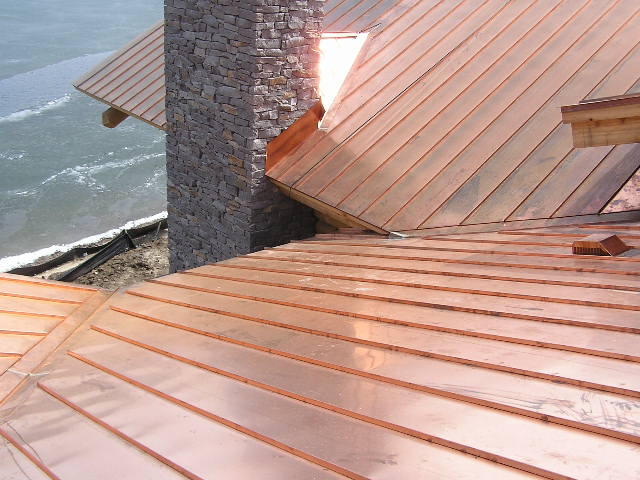
At its core, a copper roof is a system of interlocking panels, typically standing seam or batten seam, designed to move with Minnesota’s temperature swings. And that matters here. We don’t have mild seasons. We have freeze-thaw cycles, ice, heat, and everything in between.
Unlike asphalt, which breaks down over time, copper evolves. Properly installed, it’s not a 20-year roof; It’s a 70- to 100-year system, and in many cases, much longer.
But here’s the part most people miss: Copper is only as good as the installation.
If the seams aren’t right, if the soldering isn’t right, if the details aren’t right, you lose everything that makes copper worth it in the first place.
At Sheridan Sheet Metal Company, we pride ourselves at being experts in copper roofing install jobs.
Why Copper Makes Sense in Minneapolis
Minnesota is hard on roofs. Period.
Between subzero winters, heavy snow loads, ice dams, and hot summers, most roofing materials are constantly expanding, contracting, and breaking down.
Copper handles all of it.
- It expands and contracts without cracking
- It sheds snow and ice more effectively than most materials
- It resists corrosion naturally with no coatings required
- It won’t support algae or moss growth
And most importantly: It lasts.
While asphalt roofs are being replaced every 15–20 years, a properly installed copper roof is still doing its job decades later.
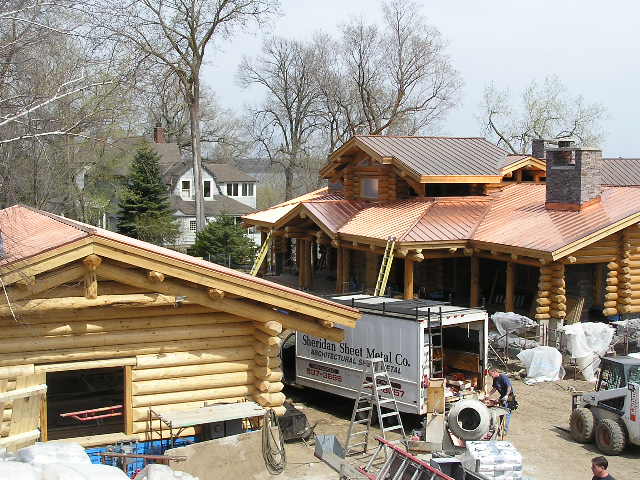
That changes the conversation from “What does it cost?” to “How many times do you want to pay for a roof?”
How Copper Roofing Is Installed (And Where It Goes Wrong)
Copper roofing isn’t standard roofing; It’s sheet metal work. That’s a big difference.
Every panel, every seam, every flashing detail matters.
Here’s what a proper installation actually looks like:
1. Prep & Planning
The roof deck is evaluated, measurements are exact, and materials are fabricated specifically for the building. No shortcuts, no “figuring it out on the roof.”
2. Underlayment
High-temp ice and water shield is critical, especially in Minnesota. This protects the structure and supports the soldering process.
3. Panel Installation
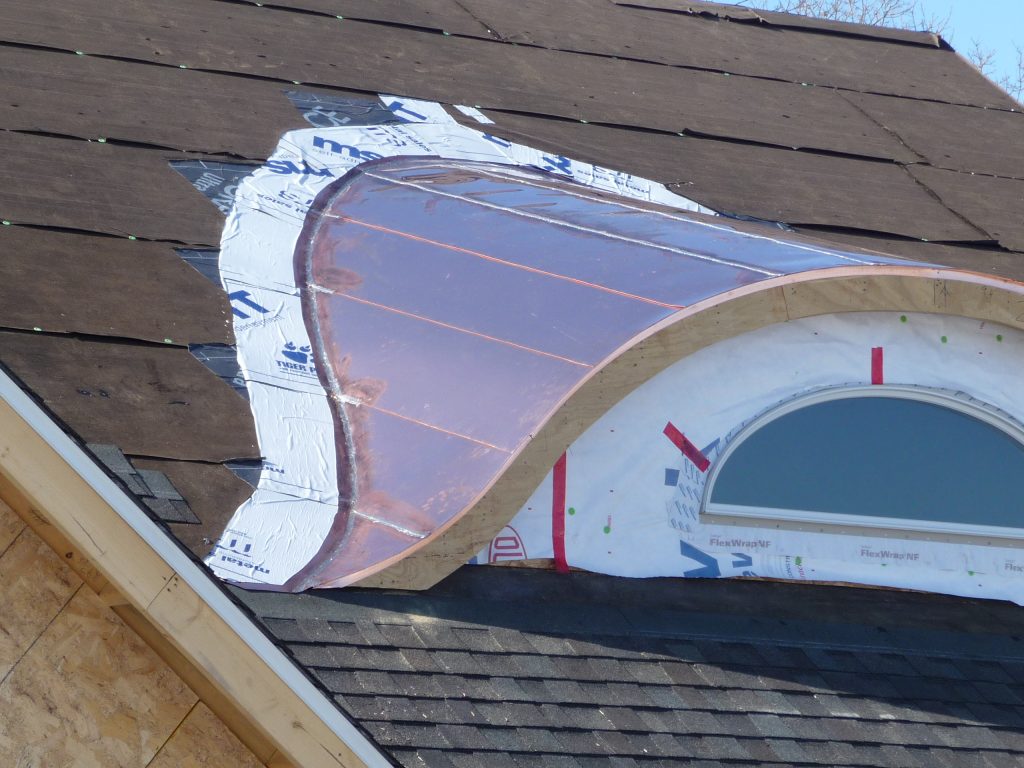
Panels are installed from the bottom up, with mechanical seams that are folded and locked; Not just overlapped like shingles.
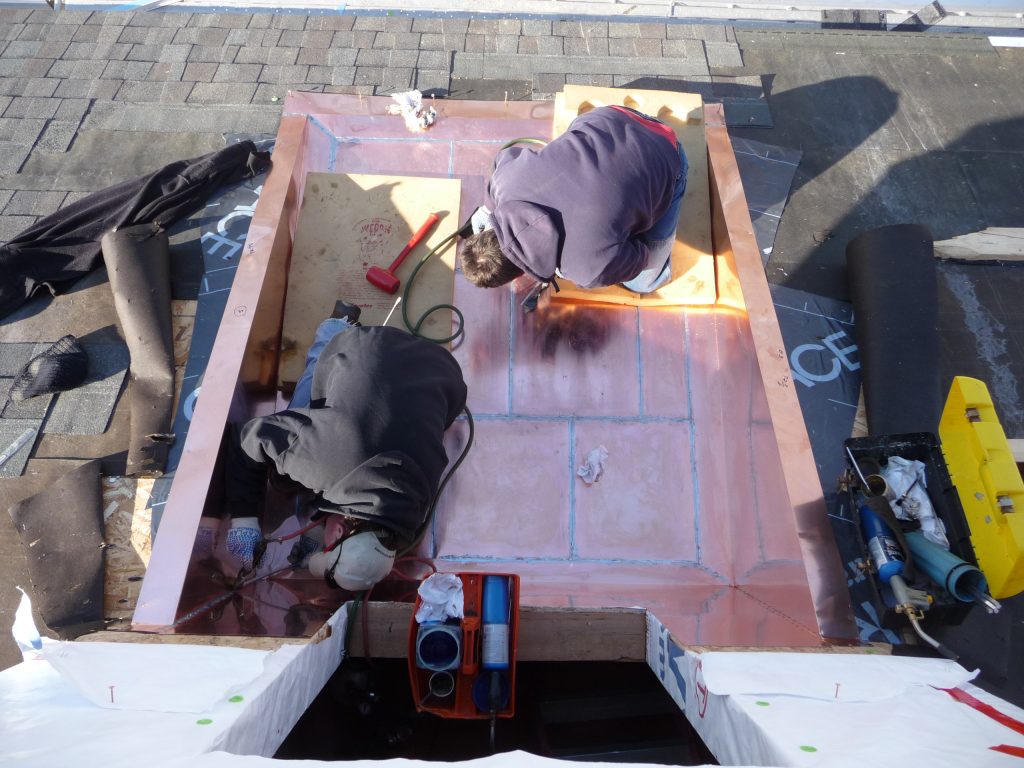
4. Soldered Details
This is where experience shows. Chimneys, valleys, penetrations; These need to be soldered correctly to be truly watertight.
5. Trim & Finish Work
Edges, ridges, transitions; This is what separates clean work from great work.

Most failures we see in copper roofing come down to one thing:
contractors treating it like standard roofing instead of precision metalwork.
Common Misconceptions About Copper Roofing
Let’s clear up a few things we hear all the time:
“Copper is too expensive.”
Upfront? Yes. Over time? Not even close.
Replacing asphalt 3–4 times over the same lifespan costs more and delivers less.
“The green patina means it’s deteriorating.”
It’s the opposite. That patina is what protects the copper from corrosion.
“Copper attracts lightning.”
It doesn’t. Lightning hits the highest point, regardless of material. Copper actually disperses energy safely.
“Any roofer can install copper.”
They shouldn’t. Copper requires sheet metal experience: Layout, soldering, expansion control. This is specialized work.
Copper vs. Other Roofing Materials
There are plenty of metal roofing options out there. Copper just sits at the top.
- Asphalt: Lowest upfront cost, shortest lifespan
- Steel: Solid option, but requires coatings and maintenance over time
- Aluminum: Corrosion-resistant, but lacks the strength and long-term durability of copper
- Zinc: Comparable performance, different aesthetic
Copper stands apart because it combines longevity, performance, and appearance, without relying on coatings or finishes that eventually fail.

What to Know Before Choosing Copper
Copper isn’t for every project and that’s the truth.
- It’s a premium investment
- It requires experienced installers
- It will change in appearance over time
- It may require structural evaluation on older homes
But if you’re looking for a long-term solution and you care about how the finished product actually looks and performs. It’s hard to beat.
A lot of homeowners we work with don’t do a full copper roof.
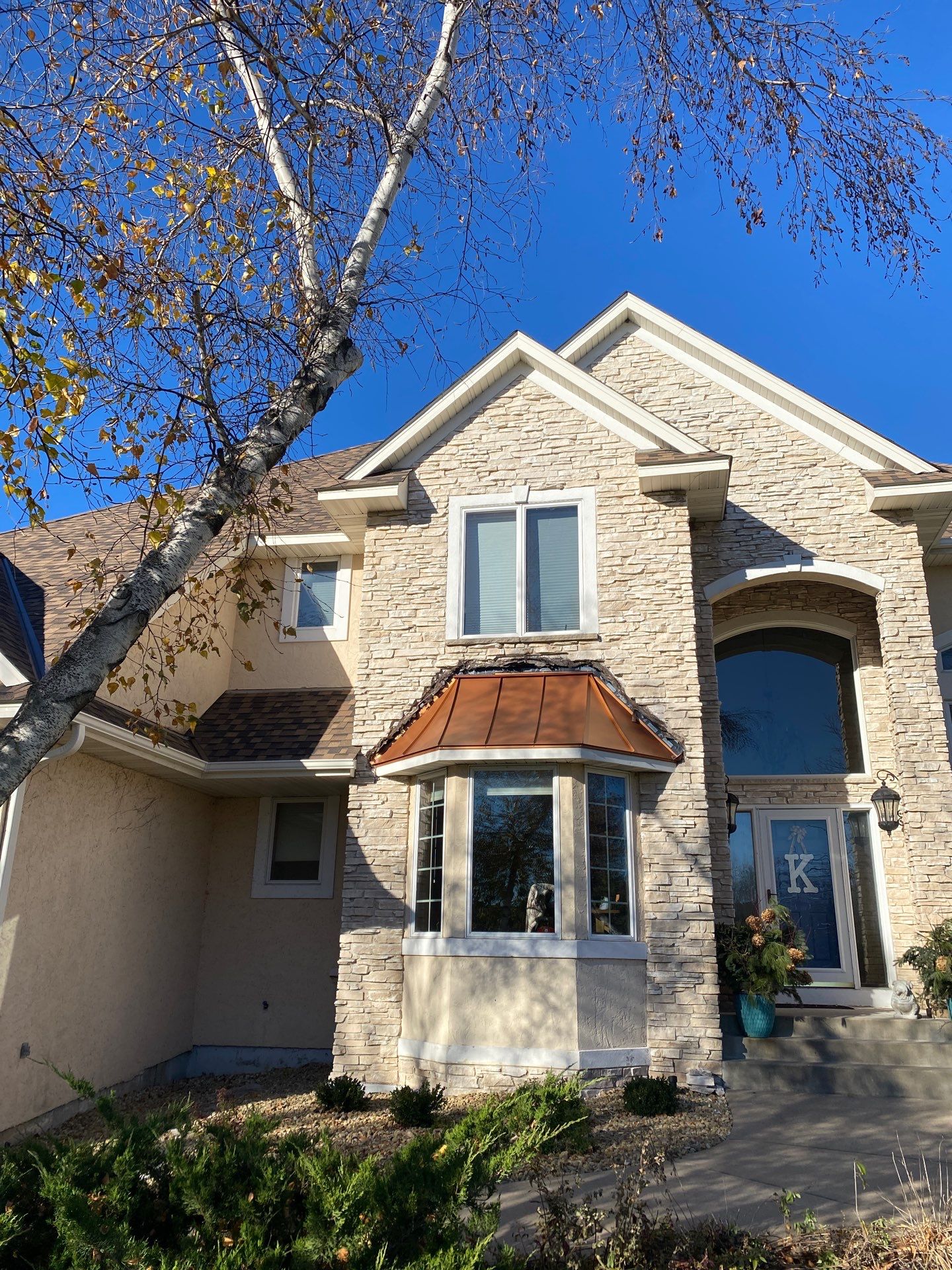
They target key areas in entryways, bay windows, dormers, porches and get the impact without the full cost.
That’s often the smartest approach.

Choosing the Right Installer (This Matters More Than the Material)
There are a lot of roofing contractors in Minnesota.
Very few actually know copper.
When you’re evaluating a contractor, look for:
- Real copper project experience (not just “metal roofing”)
- Examples of work that’s several years old
- Clear details on materials (16 oz vs. 20 oz copper, seam types, etc.)
- A strong understanding of flashing and soldering
If the bid is vague, or the details aren’t clear, that’s a red flag.
Copper doesn’t forgive mistakes.

The Bottom Line
Copper roofing isn’t just another upgrade; It’s a long-term solution.
It’s built to handle Minnesota weather.
It’s designed to last generations.
And when it’s installed correctly, it performs exactly the way it should, year after year.
At Sheridan Sheet Metal, this is the kind of work we specialize in.
Custom fabrication.
Precision installation.
Done right the first time.
Thinking About Copper?
If you’re considering copper roofing, or even just copper accents, we’re happy to take a look at your project and walk you through the right approach.

Contact Sheridan Sheet Metal to start the conversation at 763-537-3686. Or, send us a message.