In Minnesota, our buildings tell the truth about build quality and material longevity.
After a few decades of snow loads, freeze-thaw cycles, wind, and water, the materials that couldn’t keep up are long gone. What remains – on historic homes, churches, and civic buildings – earned its place.
Copper is a material that lasts.
From architectural dormers and bay roofs to copper gutters, awnings, chimney caps, and cladding, copper has been protecting Minnesota buildings for more than a century. Not because it’s trendy. Because it lasts. Because it performs. And because when it’s fabricated and installed correctly, it quietly does its job for generations.
Let’s take a practical look at custom copper architectural accents – where they came from, why they endure, and what actually matters if you’re thinking about copper for a historic or character-rich home.
COPPER’S LONG HISTORY IN MINNESOTA ARCHITECTURE
Copper isn’t new to Minnesota homes and businesses. It’s foundational.
In the late 1800s and early 1900s, builders used copper wherever failure would be costly or dangerous, including roof intersections, dormers, valleys, parapets, and drainage systems. Slate and tile roofs needed a metal partner that could last just as long, and copper was the obvious choice.
You can still see that legacy today:
- The Basilica of Saint Mary, re-roofed in copper in 1998.
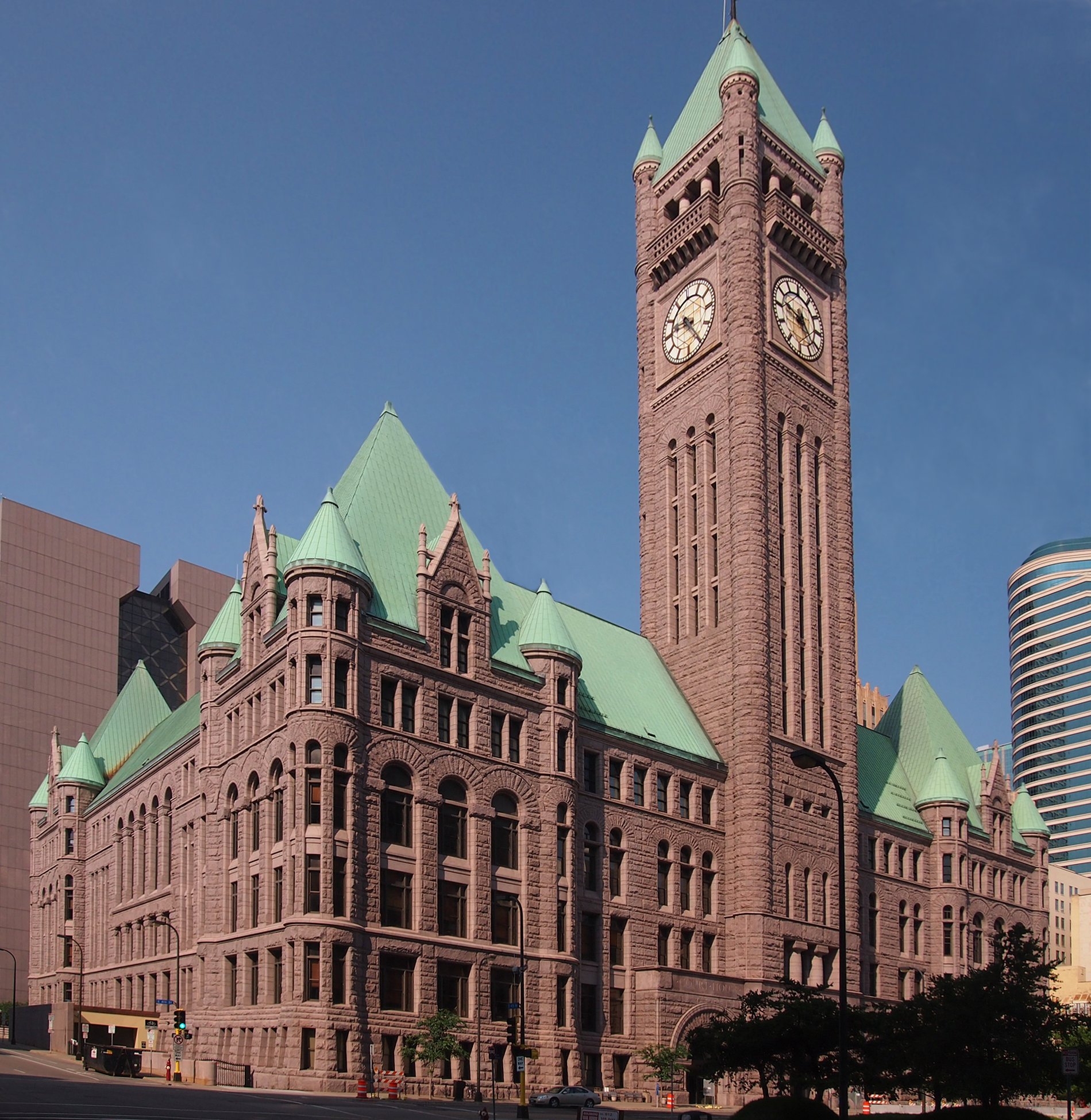
- Minneapolis City Hall, with copper elements dating back to the early 1900s, as featured in the photo above. (McGhiever – Own work, CC BY-SA 4.0)
These weren’t aesthetic upgrades. They were performance decisions. Copper was chosen because it could handle Minnesota weather… and keep handling it for decades to come.
WHY COPPER LASTS WHEN OTHER MATERIALS DON’T
Copper doesn’t rely on paint, coatings, or surface treatments to survive outdoors.
Instead, it protects itself.
When copper is exposed to air and moisture, it immediately begins forming a natural patina – a sacrificial, protective surface layer that shields the metal underneath from corrosion. Once established, it dramatically slows further corrosion and does not flake, peel, or wash away.
That’s why copper roofing, copper gutters, and copper architectural accents regularly last 75 – 100 years (and often longer) when installed properly. A well-documented example is the Hennepin County Courthouse. Portions of its copper roof have been performing since the early 1900s.
HOW COPPER AGES: FROM BRIGHT TO PATINA
One of the most common questions homeowners ask is:
“How long does it take for copper to turn green?”

The short answer: it starts changing immediately. Copper begins to react with its environment as soon as it’s installed. The timeline depends on exposure, air quality, moisture, and even residual oils from manufacturing.
Here’s what typically happens:
- 6 weeks to 6 months: copper begins to brown
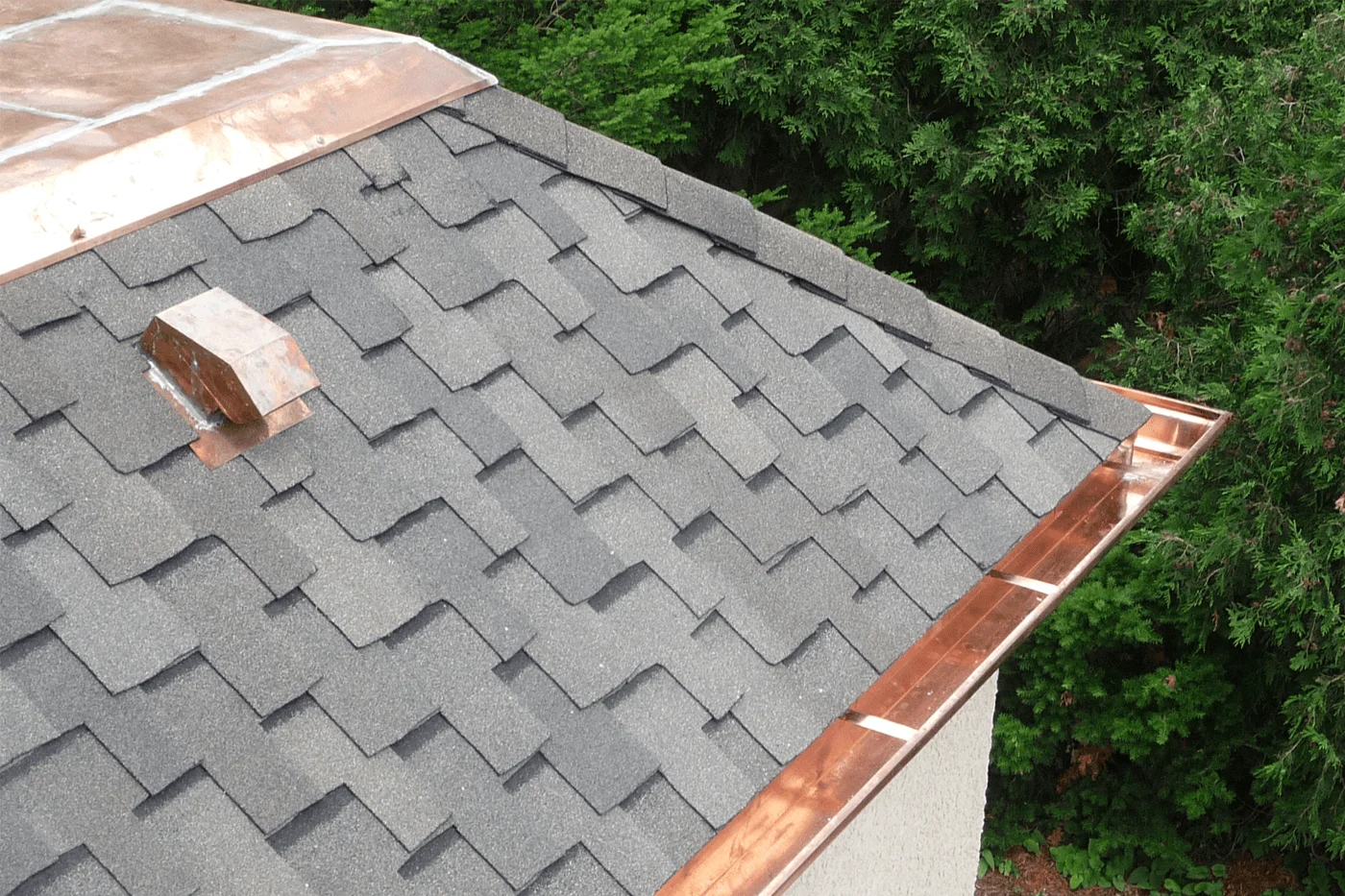
- Over the next decades, that brown deepens into a dark bronze, like this chimney cap.
- Eventually: copper develops its signature green patina
Acidic rain or certain environmental conditions can speed up or alter the process. That gradual change is part of copper’s appeal. It allows copper accents to age alongside historic homes – not fight against them.
CAN COPPER BE KEPT SHINY?
Another frequent question:
“Can I bring copper back to a shiny, new look?”
Technically… yes. Practically, it’s difficult – and temporary.
Most copper cleaners use mild acids to remove oxidation, followed by a wax or coating to preserve the shine. Weather, UV exposure, and moisture quickly break down that protective layer, and the copper begins darkening again.
Copper is best appreciated for what it naturally does:
- Develop a protective patina
- Require minimal maintenance
- Age gracefully
Trying to freeze copper in its “new” state usually creates more upkeep, not less.
COPPER AND SUSTAINABILITY: A QUIET ADVANTAGE
Long before sustainability became a selling point, copper was already one of the most environmentally responsible building materials available.
Copper is 100% recyclable.
When copper is removed from a building, it doesn’t go to a landfill. It gets melted down and reused – often without losing performance or quality. There are no paints to strip, no composite layers to separate, and no coatings to dispose of.
From a lifecycle perspective:
- Copper lasts longer than most materials
- Requires no repainting or refinishing
- Creates virtually zero waste
- Can be reused again and again
For historic homes, or new homes being built with character and a focus on eco-friendly materials, that lifecycle matters. Preservation is about choosing materials that respect the building and its future.
COMMON CUSTOM COPPER ARCHITECTURAL ACCENTS
Copper rarely stands alone. Custom copper architectural accents are typically part of a larger roofing and drainage system, designed to protect the most vulnerable areas of a structure.
Common applications include:
- Copper roofing accents on bay roofs and porch roofs
- Copper gutters and downspouts, often custom-formed to match historic proportions
- Copper awnings, both decorative and functional
- Copper architectural dormers, including cheeks, caps, and flashing
- Copper chimney caps, one of the highest-failure areas on most roofs
- Copper cladding on vertical surfaces exposed to ice and water
- Copper spires add a decorative element to the home or building.
Each of these elements solves a problem and adds beauty. When built right, these features stand the test of time.
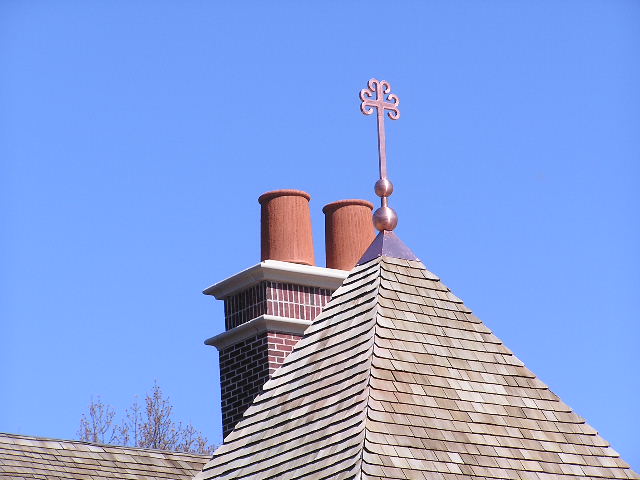
A copper spire adds visual interest to this roofline.
COPPER THICKNESS: 16-OUNCE VS. 20-OUNCE
Not all copper is the same. In architectural sheet metal, copper thickness is measured by weight per square foot.
16-Ounce Copper
- One pound per square foot
- Most commonly used in residential construction
- Typical lifespan of 75–100 years
- Used for gutters, downspouts, standing seam roofing, valleys, flashings, and shingle tins
20-Ounce Copper
- 25% thicker than 16-ounce
- More rigid and resistant to flexing or oil-canning
- Better for large flashings, gutters, and high-exposure areas
- Often preferred for historic restoration work
For older homes, thicker copper often performs better because historic structures move differently. Rooflines aren’t perfectly square. Expansion and contraction are more pronounced. The added rigidity helps copper maintain its shape over decades.
Yes, 20-ounce copper costs more upfront. But spread over a century of service life, that difference is minor.
INSTALLATION MATTERS MORE THAN MATERIAL
Copper doesn’t tolerate shortcuts. One of the most critical distinctions in copper work is how seams are sealed.
Soldered Seams
- Expected standard for copper-to-copper joints
- Creates a metallurgically bonded connection
- Watertight and permanent
- Expands and contracts with the copper
- Ages at the same rate as the surrounding material
Caulked Seams
- Temporary chemical seal
- Degrades with UV exposure and temperature swings
- Can fail as copper patinas
- Prevents proper soldering in the future
So, soldering is essential in quality copper fabrication. Once a sealant is applied to copper, it contaminates the surface. To solder it later, that section must be cut out and replaced entirely.
WHY EXPERIENCE IS NON-NEGOTIABLE WITH COPPER
Custom copper architectural accents are expensive, unforgiving, and highly technical. Mistakes are highly visible. Poorly handled copper dents, warps, and telegraphs errors permanently.
Experienced copper craftsmen (like ours at Sheridan Sheet Metal) understand:
- Expansion and contraction
- Proper dimensioning
- Clean soldering technique
- Handling and storage
- How old buildings actually behave
Copper is chosen for homes with a long future in mind – chosen as an investment in the building to eliminate future problems. And that only happens when fabrication and installation are done by people who work with copper regularly.

Our installers have up to 40 years of experience installing custom copper roofs, gutters, and accents.
WHEN COPPER REACHES THE END OF ITS FIRST LIFE
Some of the most compelling copper projects Sheridan sees involve replacement work. Homes where original copper lasted 80, 90, or even 100 years before finally reaching the end of its service life. Those projects tell a simple story: copper works – when it’s done right.
COPPER IS ABOUT PERMANENCE, NOT TRENDS
If you’re early in your research, here’s the takeaway:
Custom copper architectural accents aren’t just about flash. They’re about permanence. Copper solves water problems permanently, respects historic architecture, and ages naturally without constant maintenance.
In Minnesota’s climate, that kind of reliability matters. And that’s why copper is still here, protecting important buildings, long after other materials have come and gone.