
Architectural sheet metal isn’t simply a premium upgrade. It’s a different trade entirely, built on material standards that mass production simply can’t match.
When most people picture metal used in building exteriors, they’re thinking of the roll-formed, off-the-shelf products available at any big-box supplier. These mass-produced options are typically limited to around 26 gauge, roughly 0.018 inches thick. That’s a meaningful constraint when you’re facing Minnesota winters, where heavy snow loads, freeze-thaw cycling, and wind-driven ice don’t forgive thin material.
Custom fabrication changes that equation. Working with a skilled fabricator means access to 24 gauge stock and thicker, a seemingly small number that translates directly into greater resistance to denting, deformation, and long-term fatigue. That additional thickness significantly increases structural resistance in demanding conditions. For a roof or rain-carrying system expected to perform for decades, that difference is the margin between a 15-year replacement cycle and a multi-generational installation.
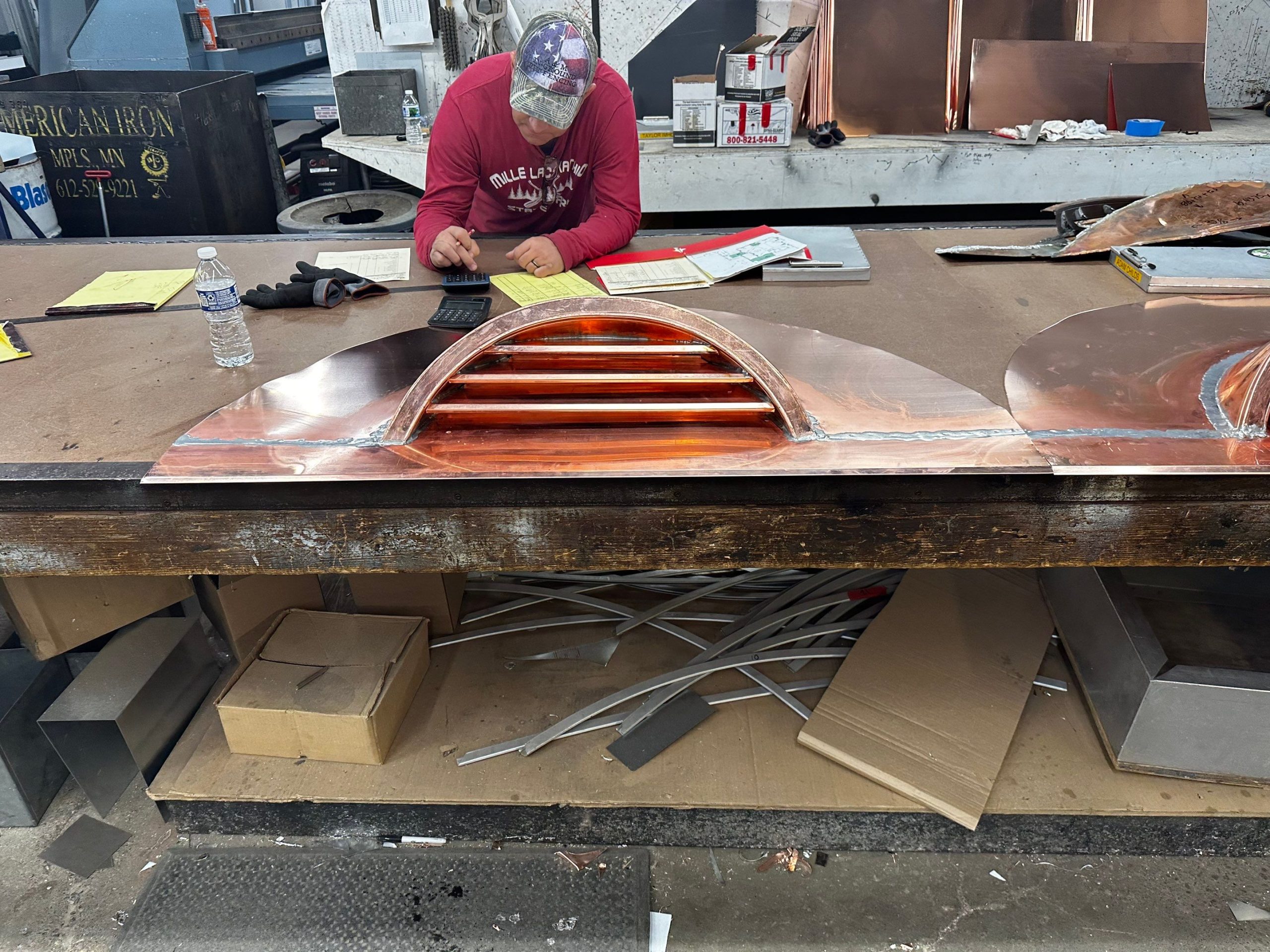
Architectural sheet metal is a specialized trade, not just a material category. It combines precision custom fabrication with deep knowledge of how metal moves, expands, and sheds water across complex building geometries. A contractor ordering from a sheet metal fabricator isn’t just buying material, they’re buying expertise in every seam, miter, and joint.
If you’re considering what that level of craftsmanship looks like on a residential roof, the options go further than you might expect. The next section explains why Minnesota architects increasingly specify custom-fabricated solutions, and why that preference starts at the drawing stage.
Why Architects Specify Architectural Sheet Metal for Complex Projects
Architects and designers increasingly reject off-the-shelf metal products and for good reason. Custom sheet metal fabrication is the only path to watertight integrity when a design moves beyond the standard.
That preference isn’t anecdotal. A significant number of architects and designers prefer partnering with manufacturers that provide tailored metal solutions over off-the-shelf products. When a roofline incorporates a compound curve, an unusual pitch transition, or a chimney saddle with non-standard geometry, a stock product simply won’t close the gap, not precisely, not permanently.

What fabricators actually bring to the table is advisory expertise. When a contractor or designer submits complex prints, an experienced fabricator doesn’t just read the dimensions, they flag potential drainage issues, suggest profile adjustments that improve long-term performance, and confirm that every seam and miter will land correctly on site. That kind of back-and-forth keeps a project from becoming an expensive field problem.
That collaborative philosophy is built into how we work at Sheridan Sheet Metal. As we tell every architect and contractor who brings us a challenging set of plans: “If you can draw it, we can make it and install it the right way.” It’s a straightforward promise, but it carries real weight when a design demands precision down to the quarter inch.
The homes and commercial projects that define Minnesota’s premium exterior market aren’t built around compromise. Understanding who actually fabricates and installs these solutions, and what skills that work demands, is where the real conversation starts.
The Role of the Architectural Sheet Metal Worker in Your Project
Architectural sheet metal work is a distinct skilled trade, one that demands mastery of both the fabrication shop and the job site, long before a single panel is installed.
A general laborer installs materials. An architectural sheet metal worker engineers a system. According to local industry experts, these specialists are trained to custom-fabricate and install metal systems designed to withstand exactly the kind of punishment Minnesota winters present: Hard freezes, ice damming, and frequent freeze-thaw cycles. That’s a fundamentally different skill set than hanging pre-formed components off a truck.
Local manufacturing matters here as much as the craft itself. When metal is fabricated close to the project, by workers who understand Minnesota’s specific climate demands, tolerances are tighter, lead times are shorter, and quality control stays in-house. Domestic materials reinforce that advantage. U.S.-sourced steel and copper carry consistent metallurgical standards that imported alternatives simply can’t guarantee, and that consistency directly affects how a finished system performs over decades.

Nowhere is this precision more visible than in standing seam metal roofing Minnesota projects. Every seam must be rolled, locked, and seated with exact tolerances to allow for thermal expansion without compromising the weather barrier. A misaligned seam isn’t a cosmetic issue, it’s a future leak waiting to happen.
That level of craft is what separates a system built to last 75 years from one that needs attention in 15. And when you’re choosing the material that goes on top of that system, the decision carries just as much weight, which is where copper deserves a closer look.
Copper: The 100-Year Solution for the Twin Cities
Copper is one of the few materials in metal roofing Minnesota professionals consistently recommend for high-end exteriors, not because it’s trendy, but because it genuinely outlasts everything else.
The reason comes down to chemistry. When copper is exposed to oxygen and moisture, it develops a natural patina, a stable layer of copper carbonate that forms on the surface over years of weathering. That patina isn’t decay; it’s protection. It acts as a sacrificial barrier, shielding the metal beneath from further oxidation. Unlike coatings that chip, peel, or degrade, the patina continuously self-repairs, which is why copper roofing, gutters, and decorative accents regularly reach up to a century without structural compromise. Synthetic alternatives, by contrast, often require full replacement within 20 to 30 years. Minnesota’s challenging freeze-thaw cycles are genuinely hard on roofing materials. Asphalt becomes brittle; painted metals can suffer micro-cracking at fastener points. Copper’s natural ductility allows it to expand and contract through temperature swings without losing integrity, a meaningful advantage when you’re protecting an investment-grade home through decades of harsh winters.

Aesthetically, the warm tones of raw copper and the distinctive blue-green of fully weathered patina have long been associated with craftsmanship and permanence. In established Twin Cities neighborhoods, copper accents on dormers, cupolas, and custom gutters signal quality in a way that no off-the-shelf product can replicate. If you’re evaluating the long-term value of premium materials, it’s worth understanding how roofing choices compare over time before committing to a system.
Copper isn’t the right fit for every project, the upfront investment is significant. But for homeowners building or renovating with a long horizon in mind, it’s one of the clearest cases where premium material and long-term value align. That same precision thinking carries directly into selecting the right roofing system overall, which we’ll cover next.
Navigating Standing Seam Metal Roofing in Minnesota
Standing seam is the gold standard for Minnesota roofs and once you understand how it handles snow, ice, and freeze-thaw cycles, it’s easy to see why.
The raised seam design is what separates it from every other panel system. Panels interlock vertically along concealed fasteners, leaving no exposed hardware for water or ice to exploit. When heavy snow loads build up, and in Minnesota, they will, the smooth, uninterrupted panel surface lets snow shed cleanly rather than pack against fasteners or seams. That means less ice dam risk, less structural stress, and fewer headaches come spring.

Professional installation is where watertight performance is either earned or lost. A correctly installed standing seam system accounts for thermal movement, proper underlayment, and precise flashing at every penetration point. This is exactly the kind of work that separates a qualified minnesota metal roofing contractor from a general roofer handling metal as a side job. When installation is done right, it’s backed by a 5-year warranty on the complete system, not just the materials.
The roofing panel is only part of the picture. Custom-fabricated gutters and downspouts, sized and profiled to match your specific roofline, complete the water management system. An oversized or mismatched gutter profile can’t handle the volume a standing seam roof delivers during a heavy melt. Matching the full system, panel, gutter, downspout, to your home’s geometry is what keeps everything performing as designed. You can explore how metal roofing investments pay off over time, including available tax credits that make the decision even more straightforward.
The right fabrication partner ties all of these components together, and that’s exactly what we’ll cover next.
The Bottom Line: Choosing a Local Fabrication Partner
Choosing the right fabrication partner is the decision that determines whether your architectural sheet metal performs for decades or creates costly problems within a few years.
Custom fabrication isn’t an upgrade; it’s a requirement for any serious exterior project in Minnesota. Working beyond standard 24-gauge limitations demands a fabricator with the tooling, material knowledge, and trade-specific experience to engineer components that hold up under real freeze-thaw stress. Architectural sheet metal is a specialized discipline, not a task you hand off to a general roofing crew. The precision required at every seam, miter, and transition point reflects years of focused craft, and that precision is what separates a system that lasts from one that leaks.

As we covered earlier, copper sits at the top of the performance hierarchy for good reason. A properly installed copper system carries a realistic lifespan of 75 to 100 years, which translates to the strongest long-term ROI of any roofing material available. Over a 30-year mortgage, that math becomes straightforward. You can dig deeper into how durability drives value when comparing material options for your project.
Local manufacturing matters here too. Domestically fabricated steel and copper, produced and shaped close to the job site, means tighter quality control, faster lead times, and direct access to the people who built your components. Sheridan Sheet Metal Company has operated on that model in the Minneapolis–St. Paul area for over 75 years, and that kind of rooted, hands-on expertise is exactly what complex architectural projects require. Explore the technical guides and fabrication resources we’ve built to support both homeowners and contractors navigating these decisions.
The right partner brings all of this together under one roof, and that’s worth exploring in the next section.
Partnering with Sheridan Sheet Metal for Your Vision
The right fabrication partner doesn’t just supply materials. They bring 75 years of Minnesota-specific expertise to every seam, miter, and custom bend on your project.
For over seven decades, Sheridan Sheet Metal has served the Minneapolis-St. Paul area as a neighbor, a craftsman, and a reliable partner for some of the region’s most demanding architectural work. That history isn’t just a number on a wall. It represents generations of problem-solving in the exact climate conditions your home or building faces every winter.
If you’re an architect, contractor, or homeowner with a complex exterior challenge, we’d like to see your prints. Bring your drawings, your specifications, and your questions. We’ll walk through the scope together, identify the custom fabrication details that matter, and make sure every component, from the flashing around a chimney to the copper gutters along a roofline, is engineered to perform for the long haul. No guesswork, no generic solutions.
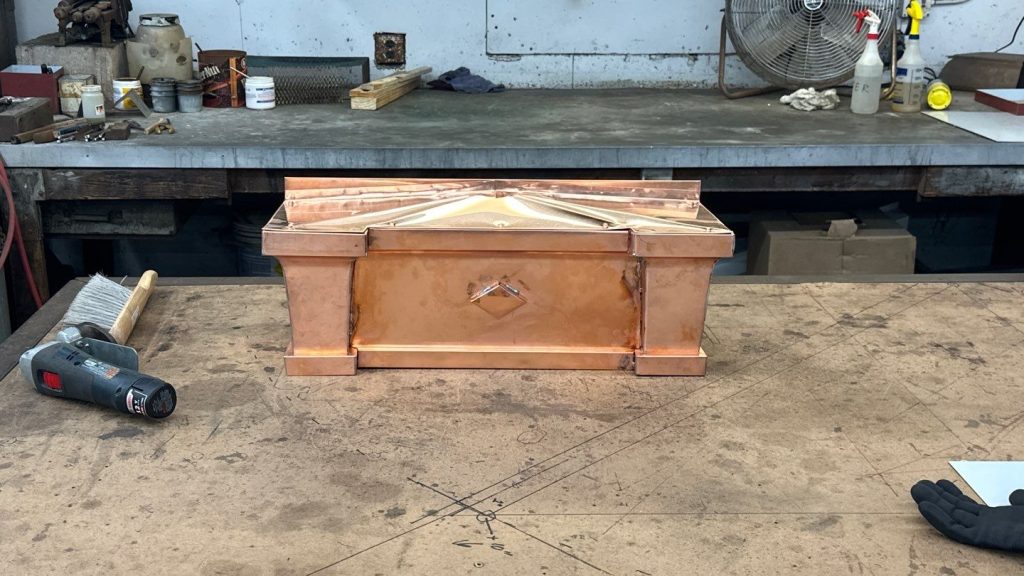
With over 2,000 stocked products available from our local facility, we’re also equipped to move quickly when your project timeline demands it. Whether you’re a contractor managing multiple standing seam installs or a homeowner protecting a significant investment, you’ll find the inventory and the in-house custom fabrication capability under one roof.
Minnesota weather is demanding. Your rain-carrying products and architectural sheet metal shouldn’t either. Start your project with Sheridan Sheet Metal and let’s build something that lasts.
Frequently Asked Questions About Architectural Sheet Metal
Architectural sheet metal refers to custom-fabricated metal components used on roofs, walls, gutters, flashing, and decorative exterior features. Unlike mass-produced products, architectural sheet metal is designed and fabricated to fit the exact specifications of a building, ensuring superior performance, durability, and aesthetics.
Architects often choose architectural sheet metal because it provides greater design flexibility and precision than off-the-shelf products. Custom fabrication allows for complex rooflines, unique building features, and seamless integration with a project’s architectural vision while maintaining long-term weather resistance.
Yes. Architectural sheet metal performs exceptionally well in Minnesota’s demanding climate. Custom-fabricated metal systems can better withstand heavy snow loads, freeze-thaw cycles, wind, and moisture exposure than many conventional exterior materials, making them a durable long-term investment.
The lifespan depends on the material used. High-quality steel systems can last several decades with proper installation and maintenance, while copper architectural sheet metal systems often last 75 to 100 years or more. Longevity is one of the primary reasons architects and homeowners choose custom-fabricated metal solutions.
Mass-produced metal products are manufactured in standard sizes and profiles, which can limit design options and performance. Architectural sheet metal is custom fabricated for each project, allowing for precise fit, improved water management, enhanced durability, and greater design flexibility.
For many homeowners and building owners, copper offers excellent long-term value. Copper naturally develops a protective patina that resists corrosion, requires minimal maintenance, and can remain functional for up to a century. Its distinctive appearance also adds architectural character and curb appeal.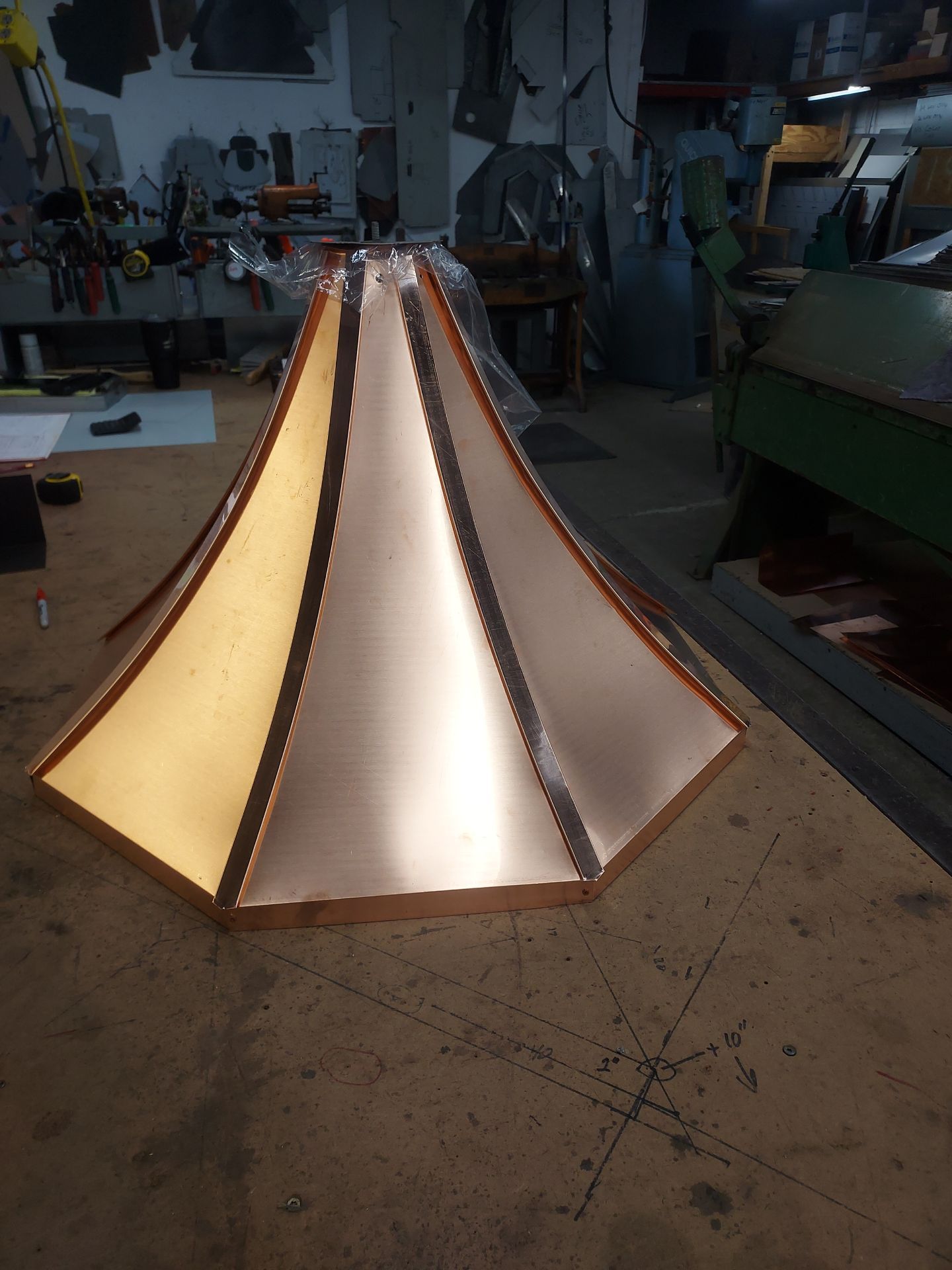
Yes. Sheridan Sheet Metal specializes in custom architectural sheet metal fabrication for residential and commercial projects throughout Minnesota. Whether you need custom flashing, standing seam roofing components, copper accents, gutters, chimney saddles, or complex architectural details, our team can fabricate and install solutions designed specifically for your project.
The best place to start is by sharing your project plans, drawings, or specifications with an experienced fabrication partner. Sheridan Sheet Metal works with homeowners, contractors, and architects to review project requirements, recommend solutions, and create custom-fabricated components that fit your design and performance goals.