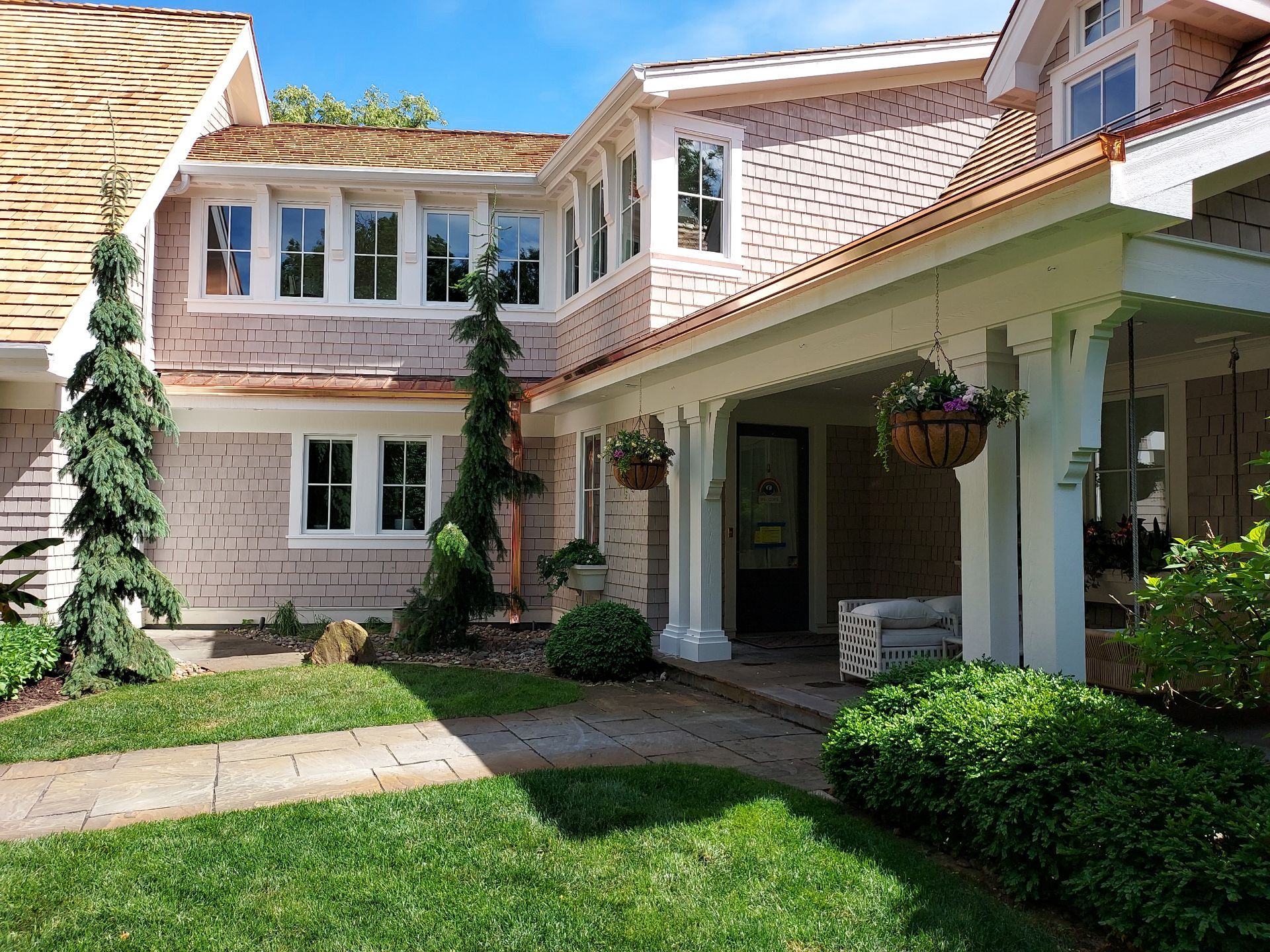

Commercial water management failures don’t announce themselves. They quietly erode foundations, buckle edge metal, and turn a minor rainstorm into a six-figure repair bill.
“The most common cause of commercial roof failure is not the membrane itself, but the failure of the perimeter drainage system to move water away from the building edge.” — National Roofing Contractors Association (NRCA)
Edge metal is the first line of defense where roofing and drainage meet. When it fails, often because the drainage behind it can’t keep pace, water migrates beneath the membrane and begins destroying the roof deck from the inside out.
Standard 5-inch residential gutters simply aren’t engineered for the large roof footprints and concentrated runoff volumes that commercial buildings generate. In practice, a 10,000-square-foot commercial roof can push water volume that overwhelms residential-grade systems within minutes, causing overshoot, where water bypasses the gutter entirely and plunges directly against the foundation.
The financial exposure is real: overshoot accelerates foundation erosion, triggers basement flooding, and can void roofing warranties. Proper commercial gutter installation means engineering for worst-case scenarios, not average rain events.
In the Twin Cities, that worst case is defined by a precise benchmark, the 100-year rainfall standard, and it demands a much harder look at gutter sizing than most property owners expect.
The 100-Year Storm: Sizing Gutters for Minnesota’s Extremes
Gutter sizing isn’t guesswork. It’s an engineering calculation driven by local rainfall data, roof area, and the consequences of getting it wrong.
The benchmark that experienced commercial gutter installers use is the 100-year storm event. According to NOAA Atlas 14 data, Minneapolis receives approximately 4.2 inches of rainfall per hour during these peak events. A system undersized for that rate doesn’t just overflow, it actively damages the property it was installed to protect.
What improper sizing actually costs:
- Foundation erosion: Overflow concentrated at building corners saturates soil and undermines footings over time
- Basement flooding: Water that can’t exit through gutters finds the next available path, typically through foundation walls
- Edge metal failure: Backed-up water wicks beneath roofing materials, accelerating deterioration at the fascia
- Liability exposure: Standing water near entryways creates slip hazards and code compliance issues
Bold callout: A 6-inch K-style commercial gutter carries 35% more water volume than a standard 5-inch residential gutter, a difference that becomes critical during a Minnesota downpour (SMACNA).
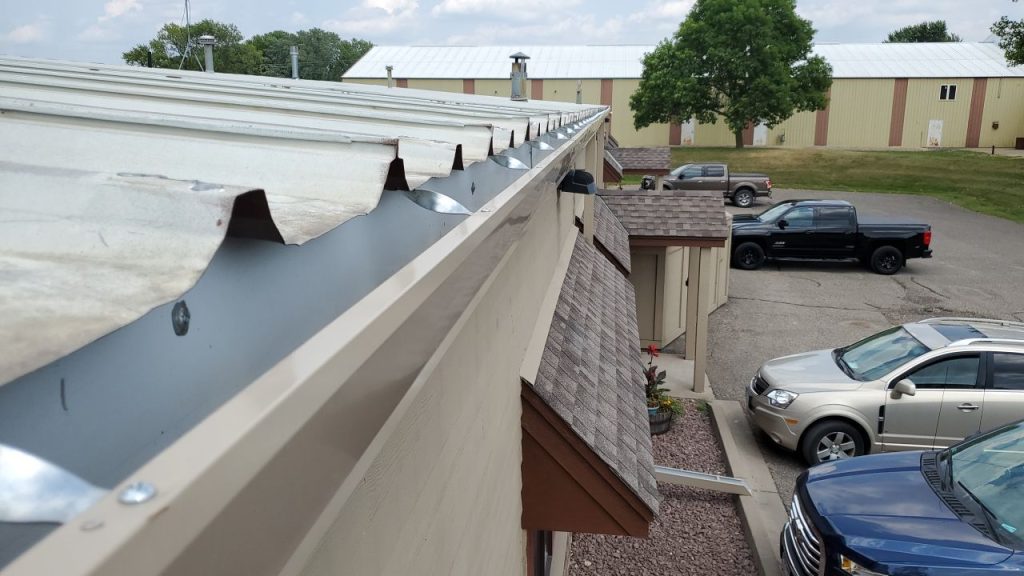
For large warehouses and industrial facilities with expansive low-slope roofs, even a 6-inch system reaches its limits. Those applications typically require stepping up to 8-inch box gutters, which handle dramatically higher flow rates across wide drainage spans. The right commercial installation approach accounts for roof pitch, square footage, and downspout placement before a single piece of metal is cut.
That calculation starts with choosing the right material, and in Twin Cities winters, material selection is every bit as critical as sizing.
Commercial Metal Selection: Galvalume, Aluminum, and Copper
Choosing the wrong material for commercial metal gutters isn’t just a budget mistake, in a Twin Cities winter, it’s a structural liability.
| Material | Gauge / Weight | Best Use Case |
| Galvanized steel | 24-gauge | Industrial box gutters, low-slope roofs |
| Aluminum | .032″–.040″ | Large warehouses, box gutter systems |
| Cold-rolled copper | 16 oz. / 20 oz. | Historic buildings, long-lifespan installs |
| PVC / thin-gauge steel | N/A | Not recommended for commercial use |
Galvanized steel remains one of the most widely used materials in custom sheet metal fabrication because it delivers an excellent balance of strength, corrosion protection, and cost. For commercial and industrial gutter systems, its zinc coating helps extend service life while keeping maintenance and replacement costs manageable.

Aluminum can be a suitable choice for box gutters when reducing weight is a priority. Naturally resistant to corrosion and easy to fabricate, it performs well in many applications, though it is more susceptible to denting and deformation than steel under heavy snow, ice, or impact.
Cold-rolled copper is the premium choice for longevity. According to the Copper Development Association, 16 oz. and 20 oz. cold-rolled copper does not become brittle in sub-zero temperatures, a critical advantage when other metals contract sharply and crack under thermal stress.
PVC and thin-gauge metals, by contrast, are fundamentally ill-suited for Minnesota. PVC becomes brittle below freezing and shatters under ice load. Thin steel without protective coating corrodes rapidly once that coating is compromised.
Understanding which material performs demands knowing which system it serves and that comes down to box gutters versus seamless configurations.
Commercial Gutter Box Systems vs. Seamless Gutters
Custom-fabricated box gutters and hung seamless systems aren’t interchangeable, and choosing the wrong one for a commercial building in the Twin Cities can mean the difference between a 30-year installation and a costly failure within a decade.
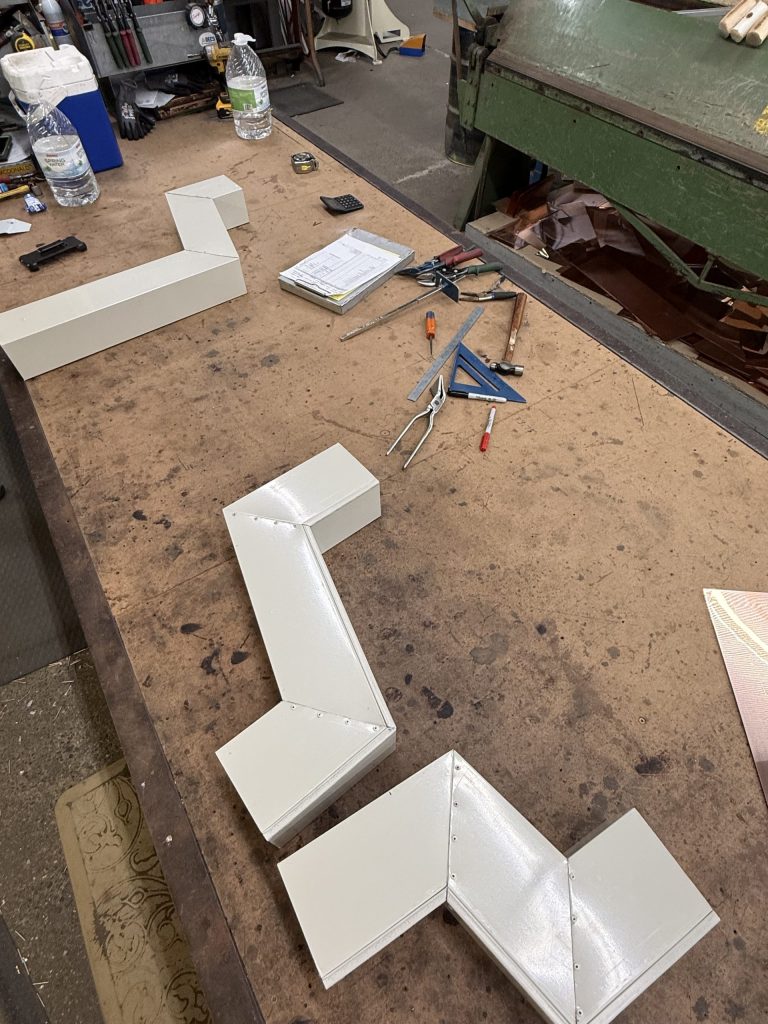
Structural integration is where box gutters win outright. Unlike hung seamless systems that attach to fascia boards, High back box gutters are built directly into the roof edge as a structural component. An A-Style 8 box gutter fabricated from 24-gauge G90 galvanized steel becomes part of the roofline itself, distributing load across the entire edge rather than relying on hangers that can pull free under heavy snow.
The ‘seamless’ myth deserves scrutiny at commercial scale. Seamless systems eliminate mid-run seams, but they still require end caps, miters, and outlet connections, every one a potential failure point on a large-footprint roof. According to the commercial gutters guide, commercial applications demand fabrication precision that generic seamless equipment simply can’t deliver for complex rooflines.
Maintenance profiles also diverge sharply. Box gutters, set flush with the roof plane, shed debris and snowmelt more naturally. Hung systems can trap ice dams at hanger points, a known liability in Minnesota winters.
Material choice and system design matter enormously here, but even the best-specified system can underperform without skilled, local fabrication behind it.
Why Commercial Gutter Fabrication Matters in Minnesota
Generic, off-the-shelf gutter components are engineered for average conditions; Not a Twin Cities roofline that cycles through ice dams, heavy snowpack, and spring downpours within a single season.
Off-the-shelf systems create gaps, weak seams, and mismatched profiles that fail precisely where a commercial building needs the most protection. When comparing commercial gutters vs seamless gutters built to spec, the difference isn’t cosmetic; It’s structural longevity measured in decades.
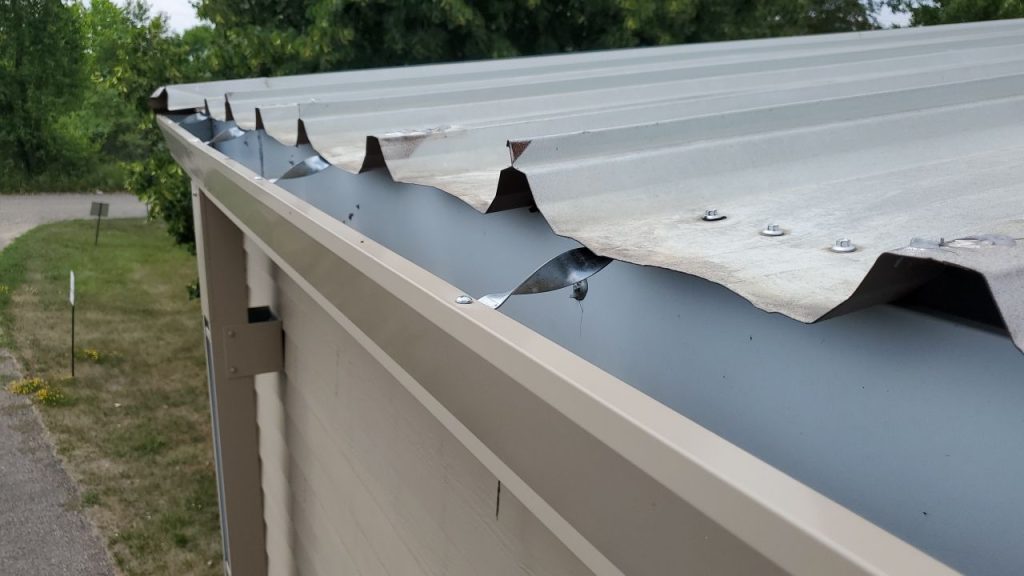
Custom fabrication eliminates that risk. Sheet metal formed and cut to match your exact roofline geometry means zero compromise at corners, transitions, or downspout connections. Complex parapet walls, multi-slope roofs, and irregular fascia profiles all require this level of precision, something no pre-formed kit delivers.
Choosing the right fabrication partner matters just as much as the material itself. Before signing a contract, ask:
- How long have you been fabricating commercial sheet metal locally?
- Do you manufacture on-site or source pre-formed components?
- What warranty do you offer on completed installations?
- Can you provide references from similar commercial projects in Minnesota?
Warranty callout: Backed by 75 years of local manufacturing expertise, Sheridan Sheet Metal’s commercial work carries a 5-year installation warranty, meaningful assurance in a climate that stress-tests every joint every winter.
That warranty only holds value when the system is built correctly from the start, which is exactly why material choice, system design, and fabrication quality all converge into one decision.
The Bottom Line: Protecting Your Commercial Investment
Minneapolis commercial roofing failures trace back to one root cause: drainage systems that were never engineered for the actual demands of the environment.

The four non-negotiables for Twin Cities commercial gutters come down to this:
- Rainfall capacity: Gutters must be sized to handle 4.2 inches of rain per hour, the regional design standard. Undersized profiles create overflow events that damage facades, foundations, and parking infrastructure.
- Material gauge: Heavy-gauge metals (24ga Galvanized or 16oz copper minimum) are required to survive the repeated freeze-thaw stress that cracks and warps lighter-gauge alternatives season after season.
- System type: Box gutters provide significantly greater water volume capacity and integrate structurally with the roofline in ways that residential-style seamless profiles simply cannot match on commercial buildings.
- Fabrication approach: Custom on-site or shop fabrication is the only way to eliminate seams, gaps, and misfit joints, the points where weather infiltration begins. A properly fabricated metal perimeter creates a continuous, weather-resistant barrier that off-the-shelf components cannot replicate.
In practice, every shortcut taken on gauge, sizing, or fit compounds over time. The cost of a properly specified system upfront is a fraction of the water damage remediation it prevents. Choosing the right fabrication partner, one with deep regional knowledge and the capacity to manufacture to spec, is what separates a gutter system that lasts decades from one that fails in its first hard winter.
Frequently Asked Questions (FAQs)
Most commercial buildings in Minnesota require 6-inch or 8-inch systems depending on roof size, rainfall load, and drainage design.
Box gutters provide greater water capacity and structural integration, making them ideal for many commercial roofing systems.
Heavy-gauge commercial gutter systems can last decades when fabricated correctly and maintained properly.
Galvanized, aluminum, and copper all perform well when properly engineered for freeze-thaw conditions.

Securing Your Perimeter with Sheridan Sheet Metal
The right drainage system for a Twin Cities commercial property isn’t a product you buy off a shelf, it’s a solution engineered for your specific roof, climate, and load demands.
Sheridan Sheet Metal has spent over 75 years serving the Minneapolis-St. Paul area, building a reputation grounded in one consistent principle: local conditions demand locally engineered solutions. That track record isn’t incidental. It reflects decades of refining what actually works on commercial rooflines that face Minnesota’s full range of freeze-thaw punishment.
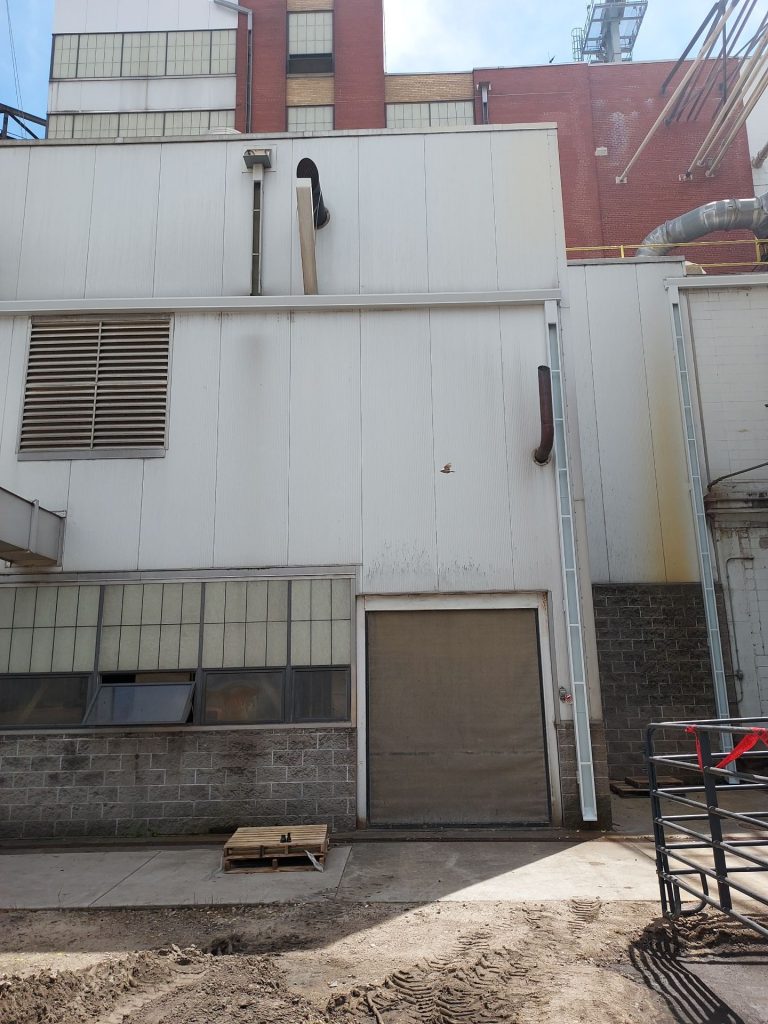
Access and capability set the foundation here. With over 2,000 stocked products and full custom fabrication on-site, Sheridan can match material, profile, and gauge to your building’s actual requirements, not a contractor’s leftover inventory. The one-stop-shop advantage matters too: when manufacturing and installation come from the same source, accountability stays unified and installation quality reflects the fabrication standard.
For commercial property owners still running undersized or generic systems, the pattern is predictable and costly. However, the fix doesn’t require a complete structural overhaul. It starts with an honest assessment of what your current drainage system is actually handling.
Reach out to our team to schedule a custom drainage assessment and find out where your perimeter is most vulnerable before the next freeze cycle arrives.