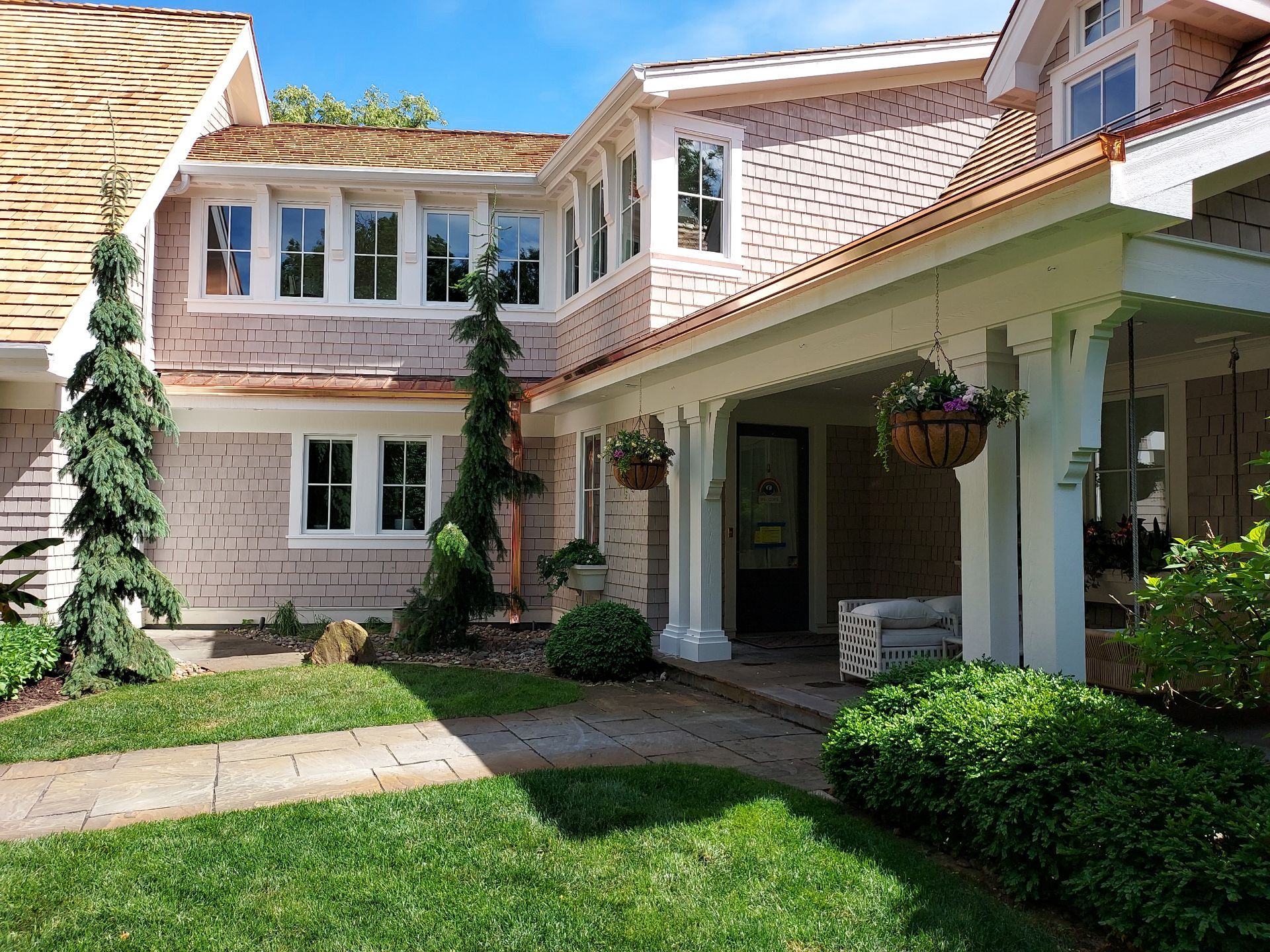

Copper gutters are one of the best long-term investments Minnesota homeowners can make. Built to withstand heavy snow, ice dams, and repeated freeze-thaw cycles, they routinely last 50 to 100 years while providing reliable protection for your home.
Minnesota weather is unforgiving. When temperatures swing from freezing to a January thaw and back again overnight, your rain-carrying system takes the full force of that cycle. Standard aluminum gutters, the default choice on most production homes, expand and contract with every shift. Joints loosen. Seams separate. Ice dams build up at the eaves, forcing standing water behind the gutter and into your fascia. What starts as a minor drainage problem quietly becomes a rot issue, a foundation issue, or both.
Homeowners often overlook the comparison between lifetime value and upfront cost. Aluminum is cheaper to install. That’s true. But when you’re replacing a system every eight to twelve years, patching seams, and managing recurring water damage, the math shifts quickly. Copper gutter installation cost runs higher at the outset, often significantly so, but copper and prefinished steel systems are engineered to outlast the home they protect. Steel, in particular, expands and contracts less than half as much as aluminum during temperature changes, according to Valiant Exteriors, which means fewer joint failures and less stress on every connection point.
This is precisely why professional contractors and architects working on high-end residential projects in the upper Midwest consistently specify copper or steel. These aren’t premium materials for aesthetics alone, though they deliver on that front too. They’re the materials that hold up under heavy snow loads, freeze-thaw cycles, and the kind of ice dam pressure that tears aluminum away from the fascia. If you’re evaluating metal gutter options for a serious project, copper and prefinished steel are where the conversation starts.
The real question is not whether to invest in a professional-grade system. It’s which metal fits your project best, and that’s exactly what we’ll walk through next.
Copper Gutters vs Steel Gutters: Choosing Your Metal
Premium gutter materials aren’t interchangeable, copper and prefinished steel each solve a different set of problems, and knowing the difference is what separates a smart investment from an expensive mistake.
| Material | Lifespan | Key Benefit | Maintenance |
| Copper | 50–100 years | Natural patina; zero rust | Minimal — self-protecting surface |
| Prefinished Steel (Kynar) | 40–60 years | Color retention; structural rigidity | Low — coating resists UV fading |
Copper’s evolving finish is a feature, not a flaw. That slow shift from bright penny to deep verdigris develops over decades, and it’s doing more than looking distinctive; the Copper Development Association confirms that copper’s natural antimicrobial properties actively inhibit the growth of moss, algae, and fungi. In practical terms, that means fewer organic clogs and less biological buildup along seams and outlet holes, which is a genuine maintenance advantage in Minnesota’s wet seasons.

Prefinished steel offers a different set of benefits. Kynar 500 (PVDF) coatings, as noted by Arkema, deliver superior resistance to UV-driven fading and chalking, so a charcoal or bronze finish holds its color across decades of sun and freeze cycles. That structural rigidity also matters: heavier-gauge steel systems resist wind-load deformation better than softer metals, a real consideration for exposed rooflines.
On the ‘look-alike’ question: several Kynar-coated steel finishes, particularly weathered zinc and aged copper tones, can closely approximate the mid-patina copper aesthetic at a lower material cost. They’re a practical option when budget and aesthetics need to meet in the middle. Our range of installed systems covers both materials in multiple profiles, so the choice comes down to your home’s architecture and long-term priorities.
That architecture question leads naturally to the next decision: which gutter profile, half-round or K-style, actually fits your roofline.
If you’re comparing a steel gutter system to copper gutters, understanding the differences in longevity, maintenance, and appearance can help you choose the right solution.

For many Minnesota homeowners, the decision comes after replacing aluminum gutters multiple times. Upgrading to a custom copper system eliminates recurring repairs and provides decades of reliable performance with minimal maintenance.
The Architecture of Style: Half-Round vs K-Style Systems
Gutter profile is more than an aesthetic choice, it directly affects water capacity, structural rigidity, and how well the system integrates with your home’s architecture.
Half-round gutters carry a traditional semicircular shape that’s been the standard on historic and luxury homes for over a century. Their smooth interior makes them easier to clean and less prone to debris buildup, which matters in Minnesota’s heavy leaf-fall seasons. Because they sit proud of the fascia on exterior brackets, they create a distinctive, finished look that suits craftsman bungalows, colonial revivals, and high-end custom builds equally well. Half-round copper gutter downspouts are typically paired with round corrugated downspouts to maintain that cohesive, traditional aesthetic, a detail that’s easy to overlook but immediately noticeable when it’s missing. You can review common questions about half-round installation specifics if you’re weighing this profile for your project.

K-style gutters, by contrast, are the workhorse of modern residential construction. Their flat back and ogee-shaped front profile mirrors crown molding, blending cleanly into contemporary fascia lines. More importantly, a K-style gutter moves significantly more water volume than a half-round of the same width, a practical advantage on steep-pitch roofs or large drainage areas.

For projects requiring additional rigidity without changing the overall profile, reverse bead gutters introduce a rolled lip along the front face, stiffening the run against thermal expansion and heavy snow loads, a subtle but meaningful upgrade in a Minnesota climate.
Bottom line: match half-round profiles to historic or traditionally styled homes; choose K-style where drainage volume and a clean modern line are the priority. Both profiles are available in copper and prefinished steel, and the right material choice carries its own set of cost and performance implications we’ll work through next.
Copper Gutters Installation Cost
Premium gutter materials are a long-term capital decision, and understanding what drives the price helps you invest with confidence rather than sticker shock.
Copper commands a higher upfront cost than prefinished steel, but when you spread that cost over a 50–100 year lifespan, the math shifts considerably. According to HomeGuide, copper gutters typically run $25–$40 per linear foot installed, while prefinished steel generally lands in the $8–$15 per linear foot range. That gap is significant, but so is the difference in quality and longevity.
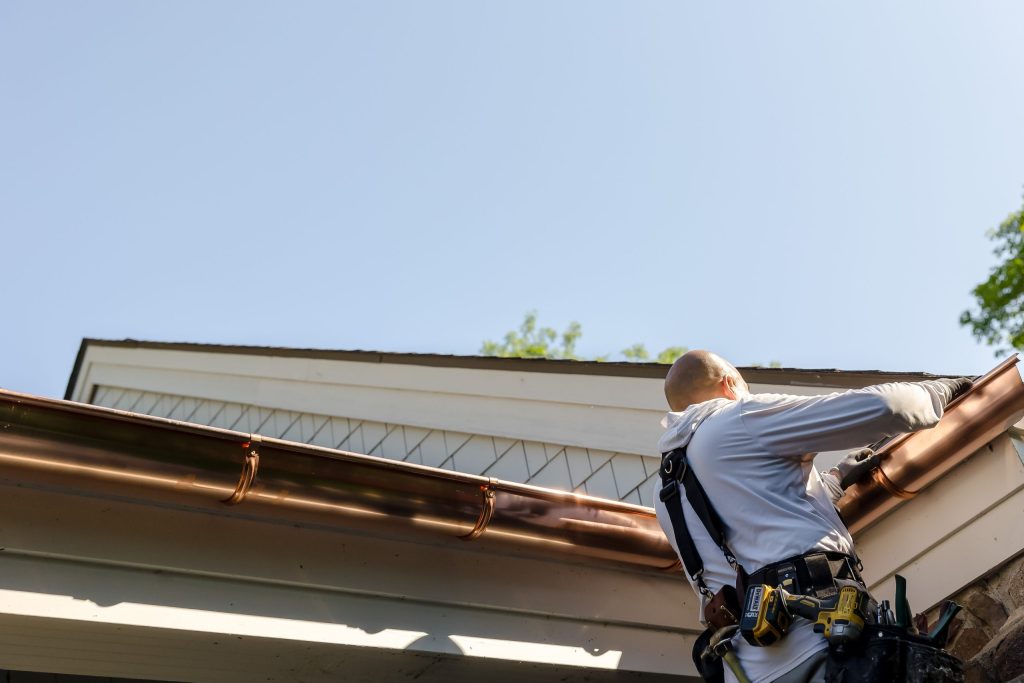
Material grade is one of the first variables to settle. Standard copper fabrication uses 16 oz. sheet copper, which is well-suited for most residential applications. Step up to 20 oz. copper and you’re adding meaningful wall thickness, a practical choice for high-exposure rooflines, longer unsupported runs, or architectural details where rigidity matters. Expect 20 oz. work to add roughly 15–25% to your material cost. Our custom gutter profiles are available in both weights, so the choice is yours to make based on the project, not our inventory.
Labor factors compound material pricing in ways that are easy to underestimate. Installation height, roofline complexity, and miter count all affect the time on-site. A straightforward single-story run is priced very differently from a multi-story home with inside corners, decorative end caps, and custom outlets. Copper gutter accessories, outlets, miters, end caps, and connectors, each require careful fitting and soldered joints, not just snapped connections. That craftsmanship takes time, and it’s part of what makes the system watertight for decades.
Lifespan is where copper’s value proposition becomes undeniable. This Old House notes that copper gutters can last 50 to 100 years with proper maintenance, meaning a homeowner on a 20-year aluminum replacement cycle could replace their system three to five times before a copper installation needs attention. Prefinished steel sits comfortably in the middle: a well-fabricated, Kynar-coated steel system, installed correctly, realistically delivers 30–40 years of service with minimal intervention. Both materials outperform the commodity alternatives, the question is simply how far out you’re planning.
Choosing the right material and gauge is only part of the equation. What carries all of it, copper or steel, is a complete system: downspouts, hangers, and accessories that match the base metal and hold everything in place through Minnesota’s freeze-thaw cycles.
Copper Downspouts and Other Essential Accessories
A premium gutter system is only as strong as its weakest connection, and that connection is often an afterthought accessory chosen without regard to material compatibility.
Downspout Dynamics
Matching downspouts to your gutter material isn’t optional in a high-end install, it’s foundational. A copper half-round gutter paired with a galvanized steel downspout creates a galvanic corrosion risk that will degrade both metals over time. Sheridan Sheet Metal always specifies downspouts, outlets, end caps, and hangers that match the base metal. The same principle applies to prefinished steel systems, where Kynar-coated accessories maintain color consistency and corrosion resistance across the entire run. Heavy-duty brackets and hangers also matter more than most homeowners expect, undersized hardware is a common failure point that causes premium gutters to sag or pull away from the fascia under Minnesota’s snow and ice loads.

The Rain Chain Alternative
Rain chains are a functional and visually striking alternative to enclosed downspouts, channeling water downward through a series of linked cups or loops. They’re especially popular on copper systems, where the natural patina of the chain complements the aged finish of the gutter over time. They’re not ideal for every roof volume or climate exposure, but on a well-designed copper system, they add an architectural detail that a standard rectangular downspout simply can’t match.
When you’re evaluating the full scope of a project, including copper gutter cost per foot for the main runs, factor in accessories early. Getting the complete picture upfront is exactly what the next section is designed to help with.
The Bottom Line: What You Need to Know
Choosing between copper and prefinished steel isn’t a matter of taste, it’s a matter of understanding what each material actually delivers over decades of Minnesota weather.
Copper is a 100-year investment. When you factor in zero repainting, zero rust, and virtually no replacement cycles, the higher upfront cost becomes straightforward math. A copper system installed today may well outlast the next two roof replacements on the same home. Whether you’re running half round or k-style gutters, copper’s longevity argument holds regardless of profile.
Prefinished steel, on the other hand, offers something copper can’t match: a broad palette of Kynar-coated colors that hold their finish against UV exposure and freeze-thaw cycling. Steel’s lower coefficient of thermal expansion, approximately 13, compared to aluminum’s 24, also means less seasonal movement at the seams, which directly reduces leak risk over time.

Material thickness deserves more attention than it typically gets. The difference between 16 oz and 20 oz copper, or between 24-gauge and 26-gauge steel, isn’t just a spec-sheet detail. It’s the difference between a system that dents under ice load and one that holds its shape season after season. Most homeowners don’t ask about gauge until there’s a problem, and by then, the decision’s already been made.
Finally, how and where your gutters are fabricated shapes the entire outcome. Custom-cut components made locally fit tighter, require fewer field modifications, and arrive without the damage risks that come with long-haul shipping. That’s a point the next section covers in full.
Why Local Fabrication Matters for Your Home
The material in your gutters and the hands that install them are inseparable parts of the same investment. A high-end copper or prefinished steel system only delivers on its promise when it’s fabricated from quality domestic materials and installed by people who understand exactly what Minnesota weather demands.
Imported gutter components may cut corners where it counts, thinner gauges, inconsistent coatings, and alloys that don’t hold up to freeze-thaw cycles. U.S.-fabricated steel, bent and formed in-house, starts with verified material standards and ends with a product sized precisely for your home. There’s no guesswork about what’s inside the wall of the gutter, and no surprises once the first hard frost arrives. When you pair that with prefinished Kynar-coated materials, known for their fade resistance and corrosion protection, you’re choosing a system built to stay reliable for decades.

That confidence extends to the installation itself. Sheridan Sheet Metal backs professional installations of custom-fabricated systems with a 5-year warranty, because we stand behind the work as much as the materials. That kind of accountability matters when you’re making a long-term decision about your home.
No two rooflines are identical, and off-the-shelf solutions often fail to account for your specific pitch, fascia profile, or drainage path. If you’re ready to explore the right gutter system for your home, start by talking to a specialist who knows the local climate and can scope a solution built around your actual structure, not a standard template.
Explore our Copper Gutters gallery, browse completed Minnesota projects, or schedule a consultation to determine the best gutter system for your home.