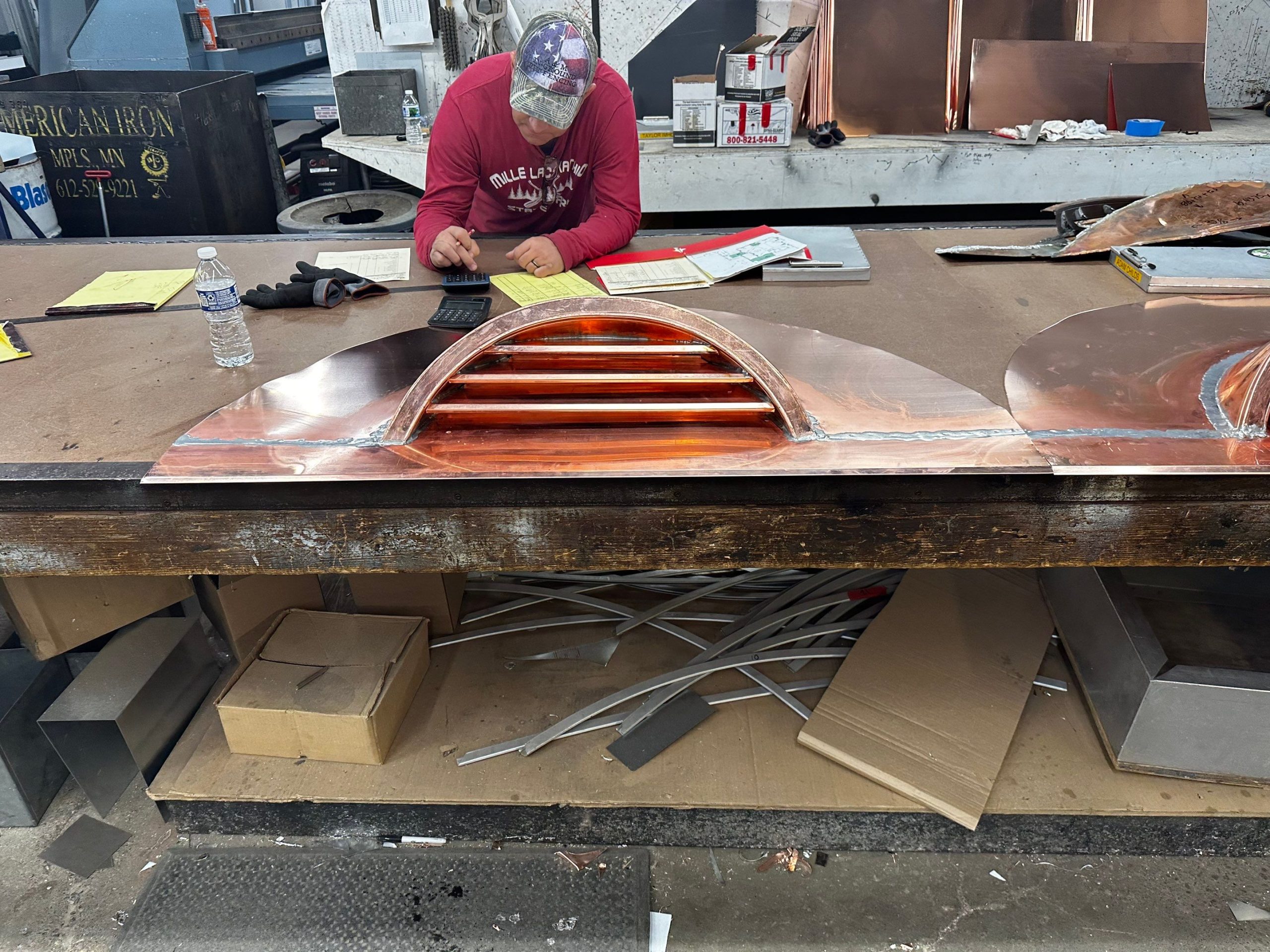

A failing gutter system doesn’t just leave streaks on your siding; it quietly builds the conditions for one of the most expensive home repairs you’ll ever face.
Here’s how the problem unfolds: every time rain or snowmelt runs off your roof, that water has to go somewhere. Without properly functioning gutters and downspouts to channel it away, water pools at your foundation. Over time, that pooling creates hydrostatic pressure, essentially, the weight of saturated soil pressing against your foundation walls. Concrete and block foundations can’t resist that pressure indefinitely. Cracks form. Water finds its way in.
The financial stakes are significant. Clogged or improperly designed gutters can lead to foundation and basement repair costs ranging from $3,000 to over $50,000. And that’s before you account for mold remediation, damaged flooring, or lost personal property, since just one inch of standing water can cause up to $25,000 in property damage.
This is why it’s important to consider your rain-carrying system. It’s not just the trough hanging at your roofline. It’s a complete system: gutters, downspouts, hangers, miters, end caps, and extensions, all working together. Homeowners who invest in gutter guards for basement flooding protection and choose properly sized components, like 6-inch gutters sized for Minnesota rooflines, are building a system, not just hanging hardware.
And with Minnesota winters getting harder to predict, that system is doing more work than ever. At Sheridan Sheet Metal, we typically recommend evaluating gutter size, roof pitch, and drainage paths together because Minnesota snowmelt events can overwhelm undersized gutters and downspouts.
The El Niño Factor: Why Minnesota Winters Are Changing the Rules
Minnesota winters have always been unpredictable, but El Niño patterns are challenging traditional drainage assumptions.

When warm El Niño systems move through the region, they don’t just bring mild temperatures, they trigger repeated “rain-on-snow” events that stack water volume far beyond what most gutter systems are sized to handle. According to Bring Me The News and MPR News, these patterns have driven record-warm winters with frequent mid-winter thaws, and the 2023–2024 season set a new benchmark that homeowners and contractors should account for.
Frozen ground is where the real danger compounds. Even during a mid-winter thaw, the soil beneath the frost line remains frozen solid, essentially acting like concrete. As Jensen Andersen notes, that frozen layer prevents absorption entirely, forcing every drop of snowmelt and rain to travel horizontally across the surface. Knowing how to route water away from foundation walls becomes critical at exactly the moment your yard offers nowhere for that water to go.
The specific risks that stack up during El Niño winters include:
- Heavy rain falling directly onto existing snowpack, doubling runoff volume in hours
- Saturated soil that refreezes overnight, creating ice dams at the roofline
- Pooling water at the foundation perimeter with no absorption relief
- Repeated thaw-freeze cycles that stress undersized or aging gutter systems
Understanding these conditions highlights why gutter sizing and system design require tailored solutions, where system specifications are crucial.
Gutters Designed for Minnesota Snowmelt: Beyond the Standard Gutter
Effective Minnesota El Niño gutter prep begins with the right components, as standard residential gutters aren’t designed for heavy thaw conditions.
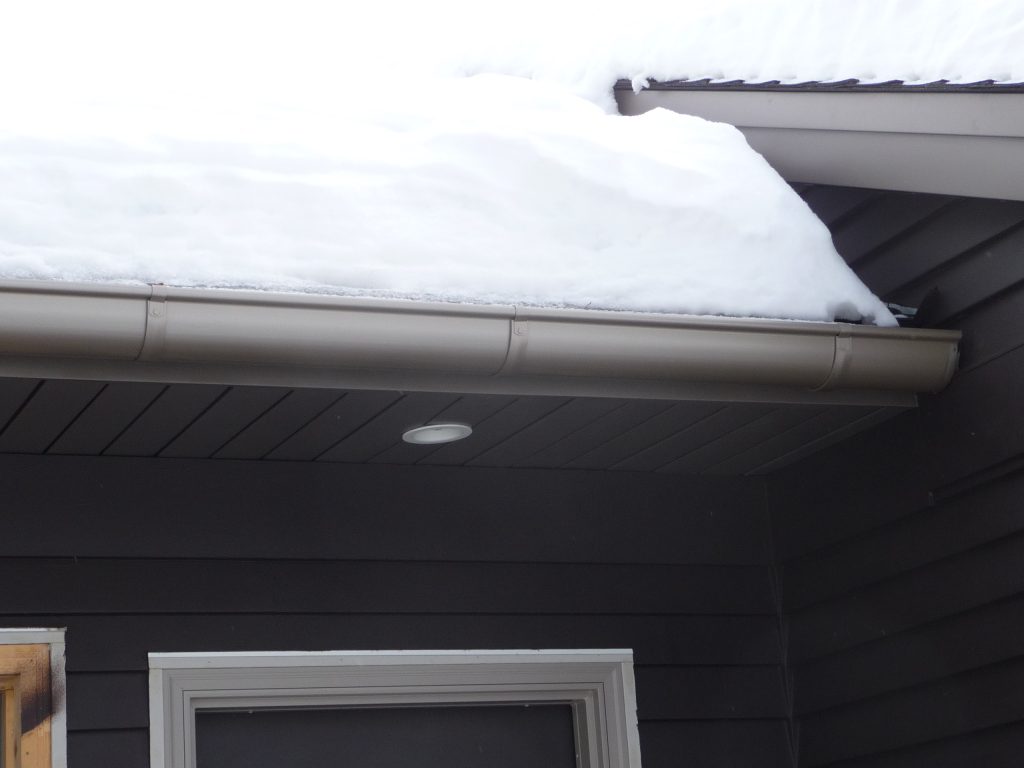
A 6-inch gutter handles roughly 40% more water than a 5-inch, and in high-volume snowmelt conditions, that difference determines whether water routes safely off your property or backs up toward your foundation. Standard 5-inch profiles are adequate for moderate rainfall, but when ice releases fast and all at once, capacity becomes critical. If you’re unsure about your current gutter system, our gutter size breakdown walks through how roof pitch and square footage factor into that decision.
Heavy-duty hangers are the next non-negotiable. Ice dam weight can exceed what standard spike-and-ferrule systems were built to hold, pulling gutters away from the fascia and breaking the seal where water control matters most. Heavier gauge steel with concealed hanger brackets spaced closer together keeps the system fixed under load.
Finally, custom pitch and seamless fabrication eliminate the two most common failure points: standing water and leaking seams. In practice, even a slight pitch error causes pooling that accelerates corrosion, while seamed gutters create joints that expand and contract with Minnesota freeze-thaw cycles until they fail.
Of course, getting water into a well-built gutter is only half the equation, where it goes from there is equally important.
How Gutters and Downspouts Protect Minnesota Foundations: Routing Water for Foundation Safety
Where your downspout terminates is as important as the gutter system design for handling snowmelt.

Once water leaves your roof, its path to safe drainage, or foundation risk, is determined by how thoughtfully your downspouts route it away from the structure. Getting this wrong turns a well-built gutter system into a foundation liability.
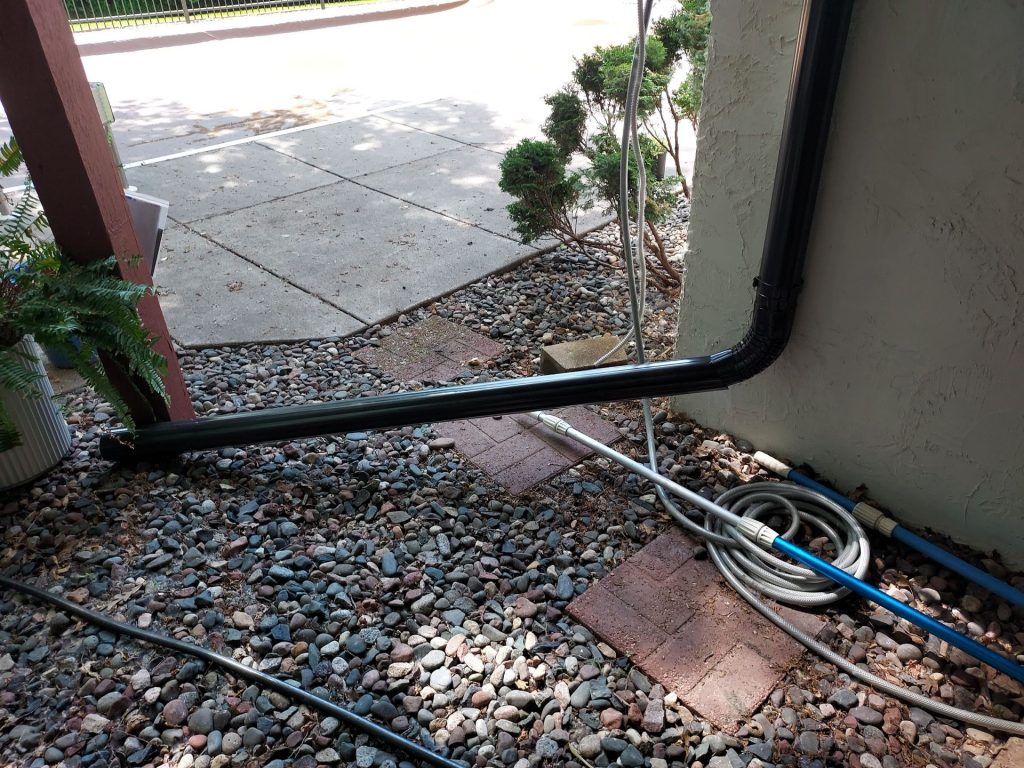
The 5-foot rule is the starting point. Downspout extensions should carry water at least 5 feet from your foundation to clear the backfill zone, the loose, disturbed soil surrounding your basement walls that absorbs water like a sponge. When extensions fall short, that water migrates straight down toward your footings. Professional basement waterproofing systems typically run $3,000–$10,000, making proper exterior routing the far more cost-effective fix.
Dead zones, low spots created by flat or inward-sloping landscaping, are the second problem to identify. Water that pools against your home’s perimeter has nowhere to go but down.
Surface extensions vs. underground bubblers each have trade-offs in Minnesota’s climate. Surface splash blocks and flexible extensions are simple and easy to inspect, but they can freeze solid or get buried in snowpack. Underground bubbler systems discharge further from the foundation and handle high volumes well, but they require careful installation to prevent frost heave from cracking the pipe.
Pro Tip: A 5-foot minimum is the rule, but sloped yards may need 10 feet or more to account for grade changes that redirect flow back toward the house. Always confirm the final discharge point routes water downhill and away from neighboring foundations too. Of course, managing roof runoff is only part of the equation. Your property may also contend with groundwater moving horizontally through the soil, and that’s a different problem entirely.
French Drains vs. Gutters: Which Does Your Property Actually Need?
Gutters and French drains solve two fundamentally different water problems and confusing the two is a costly mistake many Minnesota homeowners make.

Gutters manage vertical water, while French drains manage horizontal water. Your gutter system intercepts rain and snowmelt as it falls from your roof, channeling it away before it ever reaches the ground. A French drain, on the other hand, is a subsurface gravel-filled trench that redirects groundwater moving laterally through the soil. They’re built for different threats.
The critical failure point comes when gutters and French drains aren’t coordinated. If your downspouts terminate too close to the house, or lack proper downspout extensions for basement protection, you’re essentially pouring concentrated roof runoff directly above your French drain. That saturates the surrounding soil faster than any drain can handle, and the system backs up into the very foundation you’re trying to protect.
| Problem | Gutter Solution | French Drain Solution |
| Roof runoff during storms | Collects and routes water away | Not effective |
| Lateral groundwater migration | Not effective | Intercepts and redirects flow |
| High water table + heavy runoff | Insufficient alone | Insufficient alone |
For properties with a high water table, common in many Minnesota neighborhoods, the answer is both systems working in tandem. Your residential downspout setup needs to discharge well away from the French drain’s field. Water damage and freezing account for approximately 22.6% of all home insurance claims in the U.S., and most of those losses trace back to a gap in exactly this kind of coordination.
Getting both systems right is the foundation for everything we’ll cover in the next section.
Preparing Gutters for an El Niño Winter: Protecting Your Investment This Winter
A few targeted actions before the first hard freeze can mean the difference between a dry basement and a five-figure repair bill this winter.
As This Old House notes, proper drainage is the primary defense against high-cost water damage incidents. Here’s where to focus your energy:
- Inspect for pitch and clogs now. Gutters should slope roughly a quarter-inch per 10 feet toward the downspout. Sagging sections and debris buildup are the first signs trouble is coming.
- Check your downspout extensions. Extensions should carry water at least 5–10 feet from your foundation, a non-negotiable in Minnesota’s freeze-thaw climate.
- Upgrade if your gutters overflow. If you’re seeing water spill over the lip during heavy rain, it’s time to consider high capacity gutters Twin Cities homeowners rely on for serious snowmelt seasons. A 6-inch steel or copper K-style system handles significantly more volume than the standard 5-inch aluminum found on most older homes.
- Consult a local specialist. Minnesota’s snow-load and thaw patterns are specific. A contractor familiar with heavy-gauge steel options and regional drainage behavior will catch details a general roofer might miss.
The right system, properly installed before winter arrives, is the most cost-effective home protection decision you can make. The next question is who you trust to build it.
Why Local Fabrication Matters for Twin Cities Drainage
A neighborhood that gets real Minnesota winters deserves rain-carrying products built by people who’ve spent 75 years solving them.

In practice, that experience makes a measurable difference at every seam, miter, and downspout outlet. Off-the-shelf aluminum systems from big-box retailers are engineered to a price point, not a climate. Custom-fabricated copper and steel, bent, soldered, and fitted in-house, hold their shape under the expansion and contraction that freeze-thaw cycles force on every joint. When a system is fabricated to your home’s exact dimensions, there are no weak points for ice to exploit.
That level of precision comes from working with over 2,000 stocked products and the specialized tooling to make non-standard pieces on demand. Whether your roofline calls for an oversized box gutter or a custom copper transition, we can fabricate it correctly, the first time.
That confidence backs up the work, too. Sheridan Sheet Metal’s specialized installations carry a 5-year warranty, which means you’re not just buying a product, you’re buying accountability.
Water management in a Minnesota winter isn’t a generic problem. It deserves a custom solution, built by neighbors who understand what’s at stake. Start your project with a drainage consultation and we’ll scope it together, clearly and completely.