
Soldering copper gutters isn’t a stylistic preference; It’s the only joinery method that holds up when Minnesota decides to test your home.
Twin Cities weather is genuinely extreme. Temperatures swing from -20°F in January to 90°F in August, a range that puts enormous mechanical stress on every linear foot of metal on your roofline. That thermal expansion and contraction, repeated hundreds of times over a system’s lifetime, doesn’t just stress a sealant. It shreds it.
Sealing and joining are two fundamentally different approaches to the same problem. Sealants work through surface adhesion: they grip the outside of two metal pieces and hold them together with chemical friction. Soldering creates something entirely different. According to SMACNA, soldered joints form a permanent, molecular-level bond that effectively turns separate gutter sections into a single, continuous piece of metal. There’s no seam to fail, just one unified run of material.
This distinction matters most when you’re working with premium materials. Copper and galvanized steel gutters are long-term architectural investments, often specified on homes built with a 100-year mindset. A $6 tube of sealant isn’t a compatible partner for that kind of material or that kind of ambition.
What makes soldering the right call, and standard sealants a liability, comes down to how those sealants behave over time. That’s worth a closer look.
Why Caulked Seams are Designed to Fail
Caulk is a short-term patch applied to a long-term material and that mismatch is exactly why it fails.

Adhesion-dependent sealants and premium metal systems are fundamentally incompatible. Caulk works by bonding to the surface of two adjoining pieces. The moment UV exposure, freeze-thaw cycles, and Minnesota’s temperature swings begin working on that bond, and they start immediately, the clock is already running. Sealants and caulks are temporary fixes that inevitably dry out, shrink, and crack due to UV exposure and thermal expansion.
The expansion gap problem compounds this quickly. Metal expands and contracts with every seasonal shift. Over time, sealants lose their elasticity and physically pull away from the metal at the seam, the exact point where water pressure is greatest during a hard rain.
Maintenance cycles make this worse. A caulked system typically needs inspection and reapplication every three to five years. For someone researching how to solder galvanized steel gutters or investing in custom copper for their home, that kind of recurring maintenance defeats the entire purpose of choosing a premium material.
Chemical incompatibility is the final issue. Certain sealant formulations react poorly with copper’s developing patina, disrupting the natural oxidation layer that gives copper its legendary corrosion resistance.
The only real alternative? A joint that doesn’t rely on surface adhesion at all, which is where soldering becomes the conversation worth having.
The Art and Science of Soldering Copper Gutters
Soldered copper gutter installation creates a molecular bond, not just a surface seal, and that distinction defines everything about long-term performance.

Flux is the foundation of a clean solder joint. The process works like this: flux is brushed onto both mating surfaces to chemically clean the metal and prevent oxidation during heating. A torch then raises the joint temperature until the solder flows into the seam by capillary action, a method called “sweating.” The result is a joint filled wall-to-wall with solder, not a bead sitting on top of the metal.
Half-round copper gutters depend on this process for structural rigidity. Because half-round profiles lack a flat back panel, the soldered seam at each gutter section joint carries real mechanical load. Without that fully-fused connection, the system flexes, especially under the weight of ice and standing water during a Minnesota winter.
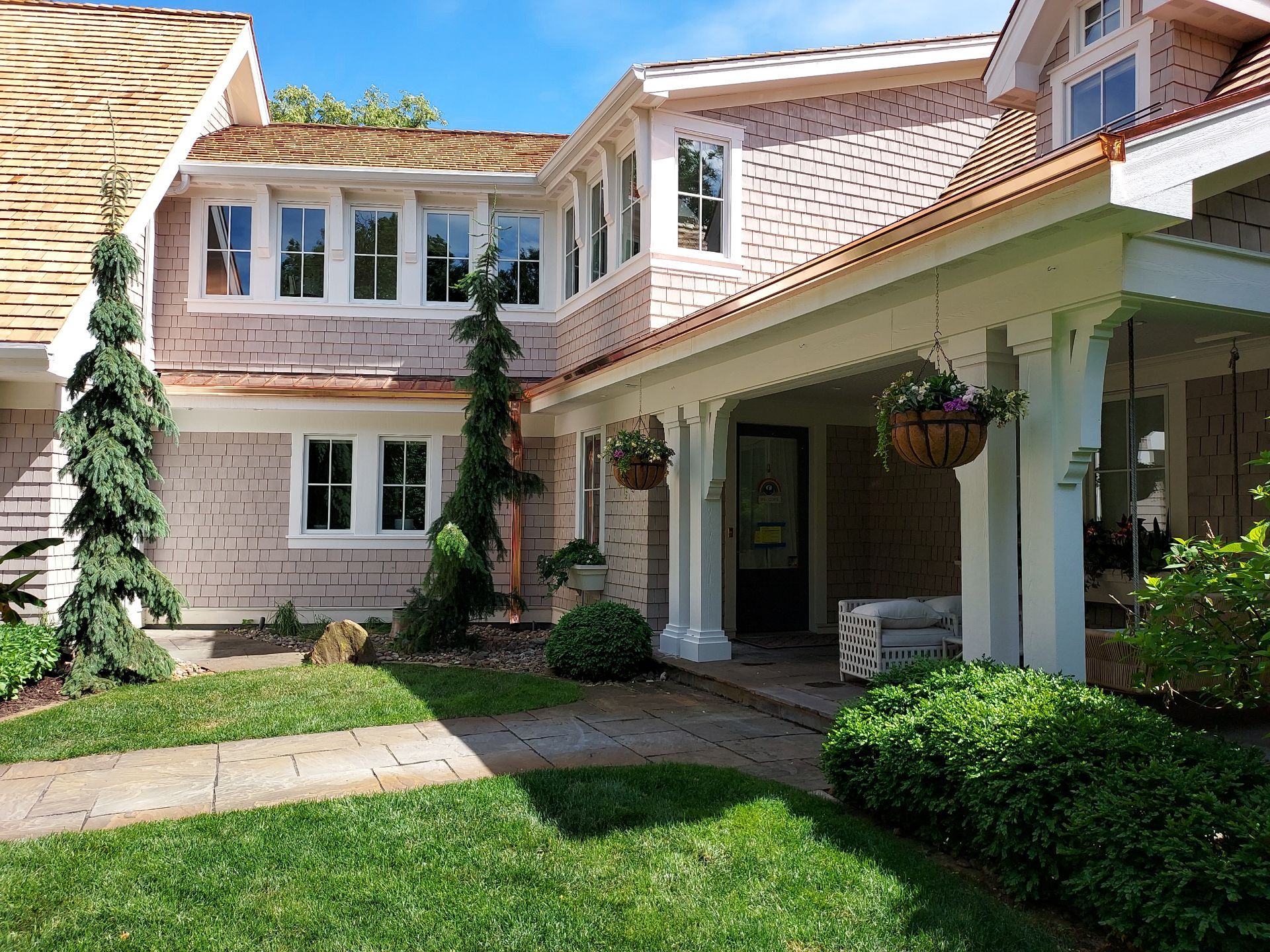
The aesthetic payoff is just as real. A properly finished solder joint presents a clean, tight line that weathers into the same patina as the surrounding copper. There are no sealant globs, no visible caulk lines, just a seamless visual that holds up for decades. According to the Copper Development Association, a properly soldered copper system can last 80 to 100+ years, making it a genuinely generational asset. If you’re weighing long-term material value, that lifespan changes the entire cost conversation.
The same precision that makes copper soldering so effective applies, with some important differences, when working with galvanized steel.
Soldering Galvanized Steel: A Critical Step for Durability
Galvanized steel gutters are tough, until you cut them, and then the clock starts ticking on corrosion at every exposed edge.

The zinc coating that protects galvanized steel stops exactly where the fabricator’s shear blade does. At every cut, seam, and miter, raw steel is exposed to moisture. Without intervention, those edges rust from the inside out, quietly, and well before the surrounding material shows any sign of wear. Soldering directly addresses this vulnerability by flowing into and across the joint, sealing the steel core from water intrusion and effectively restoring the protective barrier that fabrication disrupted.
One important caveat: not all galvanized steel is solderable. Traditional hot-dipped galvanized stock accepts solder readily. Modern “paint-grip” or Galvalume finishes, however, are engineered for paint adhesion, not soldering. Using the wrong material for a soldered install is a common mistake that leads to joint failure regardless of technique.
Contractor Considerations for Galvanized Soldering:
- Edge sealing is non-negotiable — every cut edge must be fluxed and soldered, not just overlapping seams
- Verify material spec before ordering — confirm electro galvanized, not paint-grip or Galvalume
- Heat management matters — galvanized requires the use of a soldering iron to avoid burning off the zinc near the joint
- Flux selection affects adhesion — use an acid flux rated for galvanized, and clean residue thoroughly post-solder
As the SMACNA Architectural Sheet Metal Quality Assurance Guide notes, because the pieces being joined and the solder are all metal, “this type of joint can have a life expectancy that is as long as the base metal.” That standard applies equally to copper and galvanized systems, and it’s the benchmark professional contractors work toward on every commercial-grade install.
Compared to copper gutter maintenance, which is largely about preserving patina and keeping joints clean, galvanized steel demands more precise upfront fabrication decisions. Getting those decisions right from the start, material selection, edge treatment, flux, heat, is what separates a system that lasts decades from one that fails at the first freeze. That level of precision is exactly where local fabrication expertise makes all the difference.
The Value of Local Fabrication and Specialized Installation
Proper soldering isn’t just a technique, it’s a craft that demands specialized tools, trained hands, and a deep understanding of how local weather stresses every seam.

Custom fabrication reduces the number of joints, but every joint that exists must be soldered. When runs are fabricated to exact lengths in-house, there are simply fewer seams to worry about. However, the ones that remain face real-world punishment: Minnesota freeze-thaw cycles, ice dam pressure, and heavy snowpack loading. Those conditions demand a molecular bond, not a bead of caulk.
That’s precisely where galvanized gutter soldering and copper work require something most general roofing crews can’t offer. Soldering calls for dedicated equipment, propane or MAP gas torches, specialized flux, properly tinned irons, and the kind of repetitive practice that builds genuine skill. Without it, crews commonly skip the step entirely and rely on sealants that, as covered earlier, won’t hold through a single harsh Minneapolis winter.
Seventy-five years of local fabrication experience, backed by a team of dedicated architectural sheet metal specialists, means we understand how Twin Cities drainage systems behave under stress before the first measurement is taken. That institutional knowledge is what backs our residential gutter installations, and it’s exactly why we stand behind every soldered system with a 5-year warranty. That warranty isn’t a marketing promise; it’s a direct reflection of confidence in the joint itself.
When the workmanship and the materials are both right, the results speak for themselves, and the next section pulls that case together cleanly.
The Bottom Line: What You Need to Know
Soldering is the only truly no-maintenance solution for metal gutter seams, everything else is a countdown to failure.

Here’s what that means in practice for copper and galvanized systems:
- Soldered seams are permanent. Soldered joints are the only “no-maintenance” option available, while caulked joints are essentially designed to fail. In a climate like Minneapolis, where freeze-thaw cycles are relentless, caulk isn’t a shortcut. It’s a liability.
- Your system’s lifespan depends on this one detail. Copper and galvanized gutters carry an 80–100 year potential lifespan, but only when properly soldered. Skip that step, and you’re buying a premium material without the premium outcome.
- Half-round gutter systems demand the right expertise. The curved profiles and tight miters of half-round and custom profiles require an architectural sheet metal specialist, not a general installer. The geometry doesn’t forgive shortcuts.
- This is a specialized craft, not a DIY task. Professional soldering requires purpose-built tools, climate-controlled conditions during application, and years of hands-on experience with architectural metalwork.
The craftsmanship behind a properly soldered system is what separates a 10-year repair from a century-long investment, and that distinction is worth understanding before your next project begins.
Investing in a Century of Protection
When you weigh soldered vs caulked gutters side by side, the decision isn’t really about upfront cost, it’s about how many times you want to solve the same problem.

A properly soldered metal rain-carrying system is a one-time solution. The labor, the material, the custom fabrication, every dollar spent is protecting your home’s foundation, fascia, and siding for decades to come. Sealant degrades. Soldered seams don’t.
That’s the kind of thinking that has guided architectural metalwork in the Twin Cities for generations. Minnesota winters don’t leave room for shortcuts, and homeowners who invest in quality installation don’t find themselves back at square one after a hard freeze.
If your home has non-standard dimensions, historic profiles, or architectural details that demand precision, the right move is to consult with a specialist before settling on a system. Sheridan Sheet Metal stocks over 2,000 products and handles complex copper work for exactly these situations — because custom fabrication isn’t a premium add-on, it’s just how the job gets done right. You can also review what goes into fair gutter pricing before your first conversation.
We’re here when you’re ready to talk through your project. Reach out to Sheridan Sheet Metal to get a custom project scope and work with a team that’s been doing this the right way for 75 years.
FAQ: Soldering Gutters
Soldered gutters create a permanent metal-to-metal bond that resists leaks, expansion, and weather-related deterioration better than caulked joints.
Yes, traditional hot-dipped galvanized steel can be soldered when the proper flux and installation techniques are used.
A properly installed soldered copper gutter system can last 80–100 years or more with minimal maintenance.
Most homeowners should leave soldering gutters to experienced professionals because proper heat control, flux selection, and material preparation are critical to long-term performance.