That cracking, groaning sound in January, when a gutter finally surrenders to months of punishment and tears away from the fascia board, is something too many Minnesota homeowners know firsthand and share with our team at Sheridan Sheet Metal Company. Standard gutters simply aren’t engineered for what this climate dishes out.
Minnesota winters are brutal by any measure. A single day can swing 40 degrees in either direction, cycling materials through constant stress. What that means for gutters is relentless thermal expansion and contraction, repeated freezing and thawing, and ice loads that would test any material’s limits.
Here’s how standard materials fail under those conditions:
- Vinyl becomes brittle below zero. When temperatures drop into negative territory, vinyl loses its flexibility and cracks under the slightest impact, falling ice, a ladder, or even just the pressure of expansion.
- Aluminum joints separate. Sectional aluminum gutters expand and contract at every seam with each temperature cycle, and those joints eventually open up, leak, and invite fascia rot.
- Sealants degrade faster than expected. Even high-quality caulking struggles to hold against Minnesota’s aggressive freeze-thaw cycles, turning a minor seam into a major water problem.
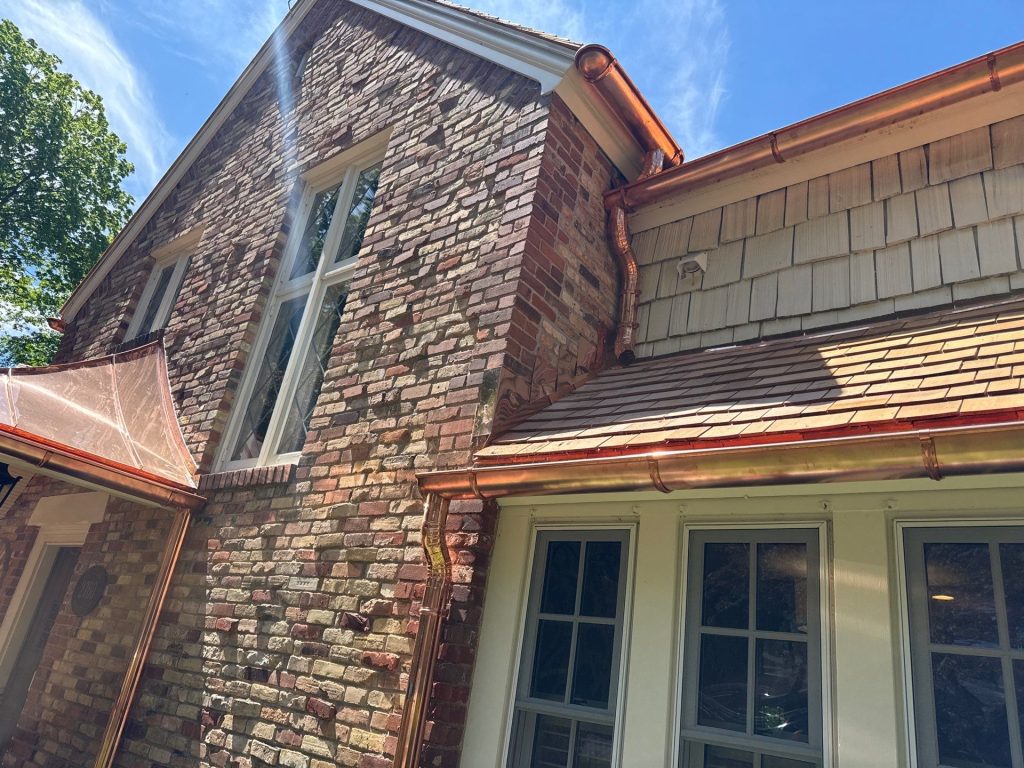
Placing copper gutters on a home in this environment is a fundamentally different decision. Copper is highly resistant to thermal expansion and contraction, maintaining structural integrity through repeated freezing and thawing. That physical stability is what makes copper a generational investment rather than a recurring expense, and it’s only the beginning of the story. Understanding exactly how copper handles the most extreme loading conditions Minnesota can produce starts with one defining event: heavy, wet “heart attack” snow. At Sheridan Sheet Metal, we design and install custom copper gutter systems built specifically for Minnesota’s climate.
Engineering for the “Heart Attack” Snow
Minnesota contractors have a grim nickname for the heavy, wet snowfall that arrives in late winter: “heart attack snow.” It’s dense, water-saturated, and deceptively brutal on a home’s exterior. Unlike the light powder of December, this late-season accumulation can weigh three to five times more per cubic foot and your gutters bear the brunt of it.
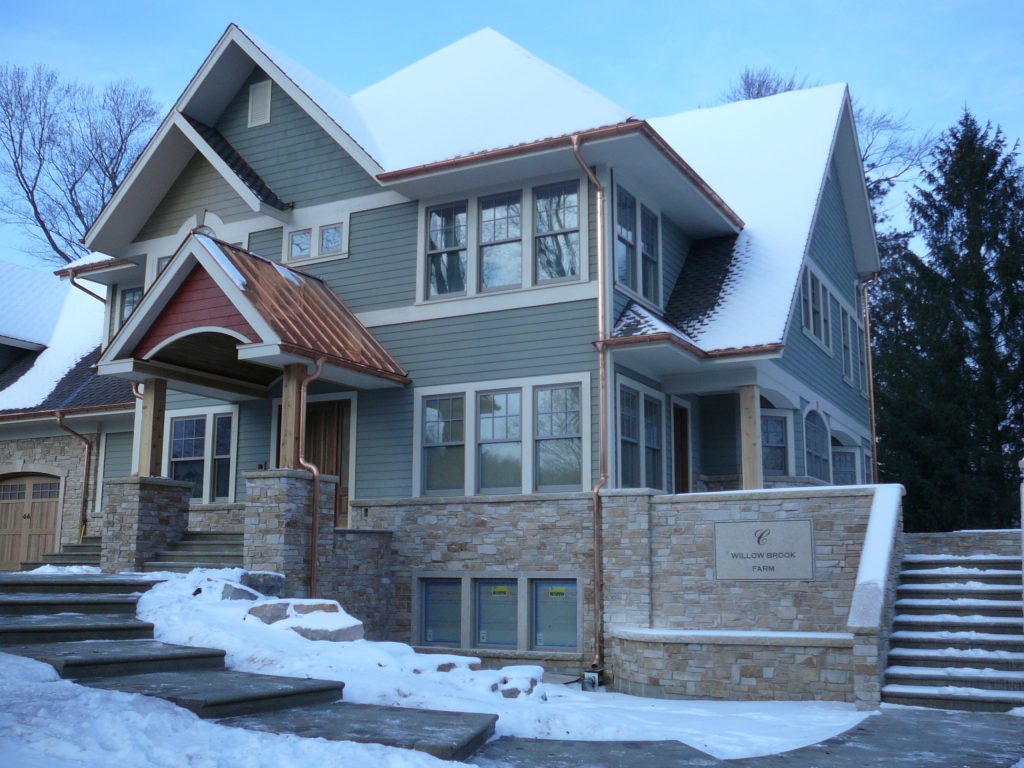
The math is sobering. According to the National Gutter Authority, a single 20-foot gutter section filled with compacted ice and snow can impose a concentrated load of 300–500 pounds on a home’s eaves. Standard aluminum gutters, with their thinner gauge and seamed construction, simply weren’t designed to absorb that kind of sustained stress. The result is the sag, separation, and fascia rot that plague so many Minnesota homeowners year after year.
Gauge Is Everything
The difference between copper and aluminum starts at the material level. Standard residential aluminum runs at 0.027 inches thick. 16-ounce copper, by comparison, brings significantly greater rigidity and tensile strength to every linear foot. Heavy-gauge copper systems are engineered to support up to 50 pounds of snow per linear foot without buckling, a performance standard aluminum can’t reliably match.

The Hanger System Matters Too
A copper gutter’s strength isn’t an isolated feature. Heavy-duty hidden hangers, spaced closer than industry minimums, distribute load across the fascia board rather than concentrating stress at single attachment points. This tandem engineering, rigid material plus robust mounting, is what keeps any quality house with copper gutters structurally sound through repeated freeze-thaw cycles.

That long-term structural integrity, it turns out, is only the beginning of copper’s value proposition.
The 100-Year Gutter
The tensile strength and load capacity discussed in the previous section explain how copper survives Minnesota winters. But longevity explains why it’s worth every dollar upfront.
While standard aluminum gutters provide 20–30 years of service, copper gutters carry a functional lifespan of 60 to 100 years. That’s not a marketing claim. It’s a material reality rooted in copper’s resistance to oxidation, thermal fatigue, and freeze-thaw cycling. In Minnesota’s climate, that difference is even more pronounced.
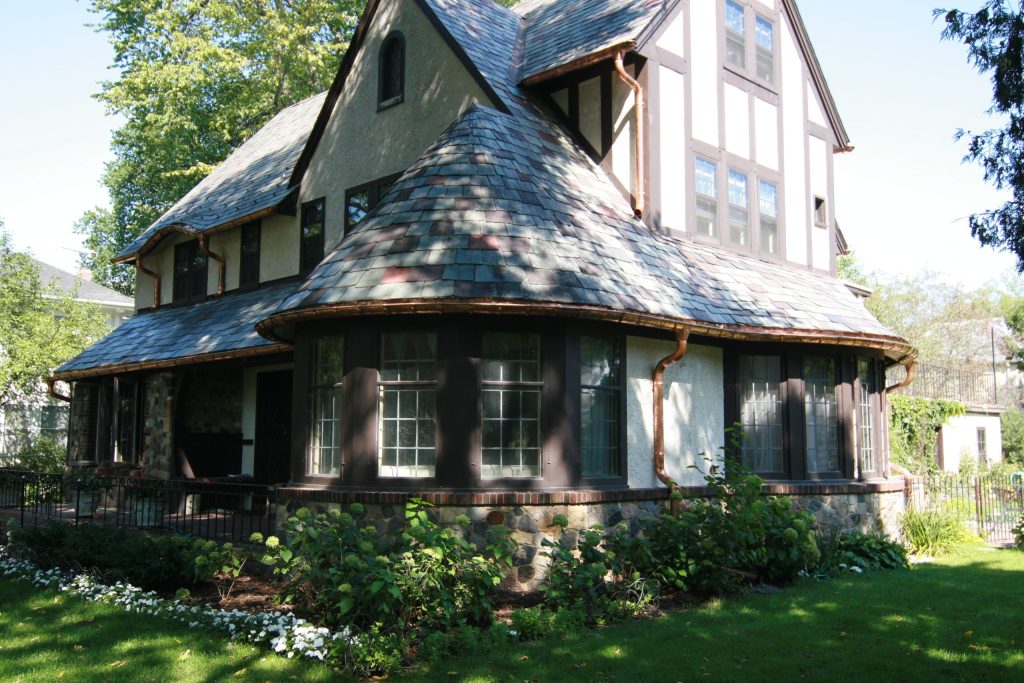
The math is straightforward and persuasive.
The Math of a 100-Year Gutter
Assume aluminum gutters cost $8–$12 per linear foot installed and need replacement every 25 years. Over a 100-year span, a homeowner replaces them three to four times, accumulating $24–$48 per linear foot in total spend, plus the compounding costs of labor, disposal, and inevitable fascia repairs from failed seams. A custom seamless gutter fabricated in copper, installed once, eliminates that cycle entirely.
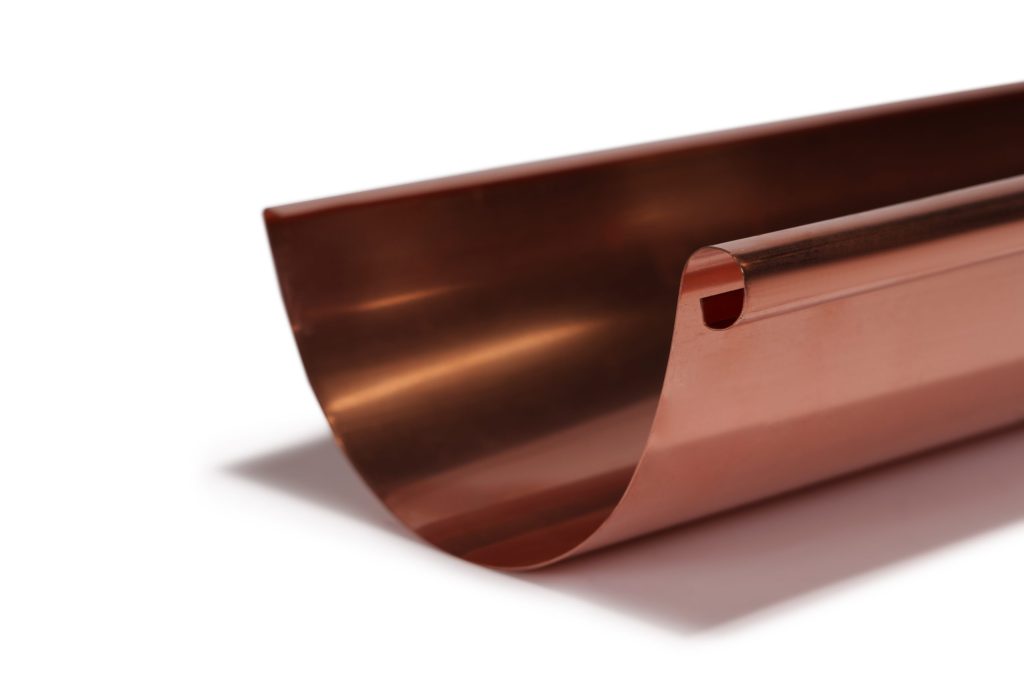
Beyond the numbers, copper elevates a home’s market position in ways aluminum simply cannot. For luxury properties, appraisers and buyers recognize copper gutters as a premium, permanent feature, one that signals the same long-term thinking as a slate roof or old-growth hardwood flooring.
That durability and restraint, however, come with an unexpected bonus. One that actually improves with age. How copper looks after five years in Minnesota is a story worth telling on its own.
Because Sheridan Sheet Metal fabricates and installs systems locally in Minnesota, homeowners benefit from solutions specifically designed for regional weather demands.
Aesthetic Evolution
One of the most compelling arguments for choosing a copper Minnesota gutter system isn’t structural; It’s visual. Copper doesn’t just resist the climate; it responds to it, developing a living patina that transforms the entire character of a home over decades.
The Timeline of Beauty
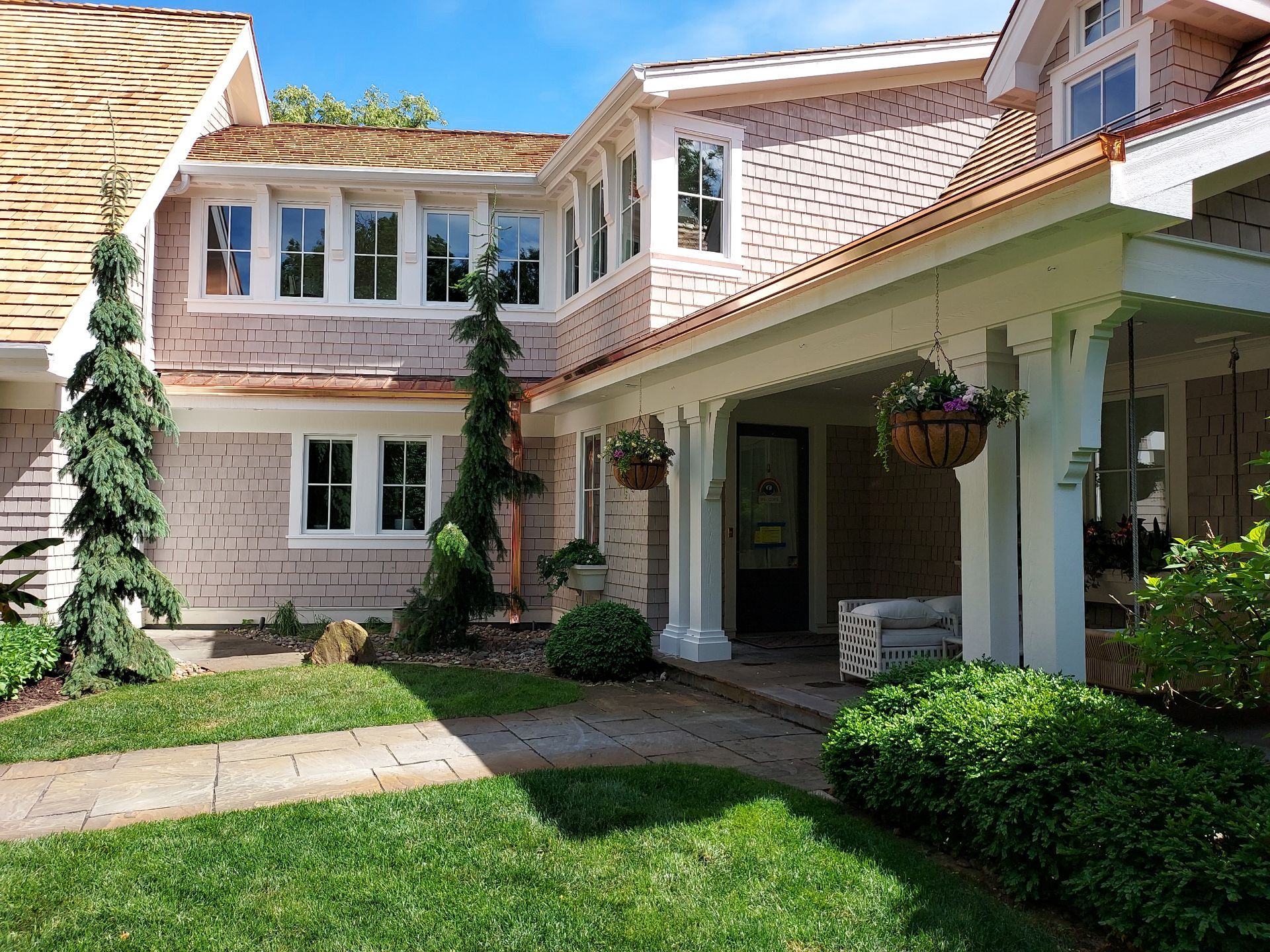
- Year 1: Fresh copper gleams with a warm, penny-bright orange that draws immediate attention. Against cedar shake or slate, it reads as unmistakably premium.
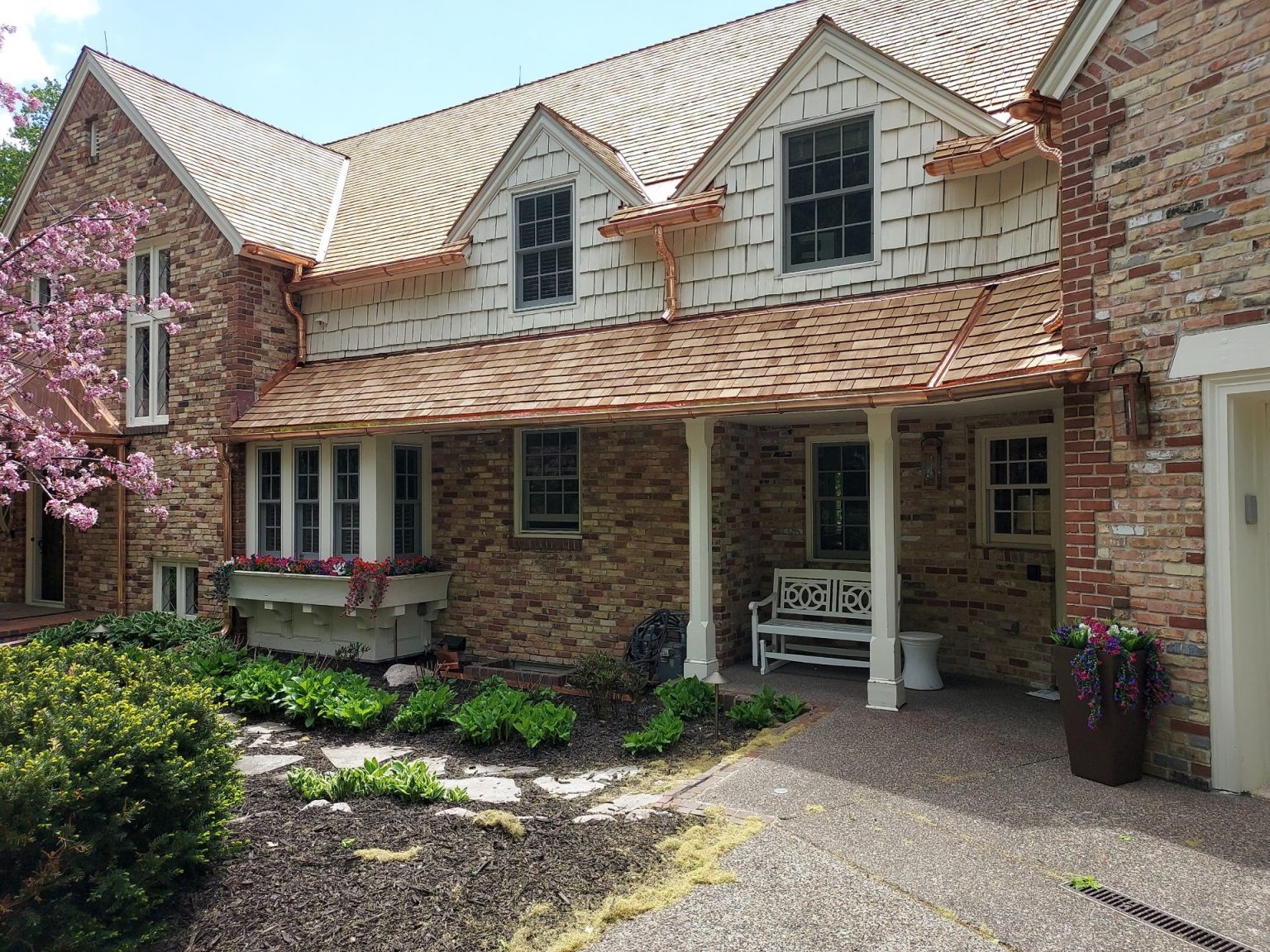
- Year 5: Minnesota’s freeze-thaw cycles, humidity, and seasonal temperature swings accelerate oxidation. By this point, the surface shifts into rich chocolate and espresso browns—arguably the most sophisticated stage of the patina.
- Year 20+: The iconic blue-green verdigris fully emerges. This is the color associated with historic architecture, copper church steeples, and grand civic buildings. A finish that simply cannot be replicated artificially.

What makes this evolution architecturally powerful is consistency. Copper ages uniformly, rewarding homeowners who invest in whole-system fabrication rather than patchwork installation.
That cohesion matters especially when pairing gutters with high-end roofing materials. Anchor Roofing MN notes that copper gutters are often cited as the ideal finishing touch for premium composite shake roofs, maintaining the architectural integrity that luxury materials demand.
Of course, that beauty comes with real considerations worth addressing directly. Sheridan Sheet Metal has helped Minnesota homeowners protect their homes from freeze-thaw damage for decades through custom-fabricated gutter systems.
Addressing the Cons (FAQ’s)
Copper gutters deliver undeniable long-term value, but transparency matters. There are real objections to consider before committing, and understanding them honestly is what separates a confident investment from a costly surprise.
Copper materials and skilled labor run significantly higher than aluminum or vinyl. Often three to five times more. However, what typically happens is that homeowners calculate total cost of ownership rather than sticker price and find the math reverses. A copper system installed today may outlast two or three replacements of cheaper alternatives, eliminating both material costs and recurring labor fees over decades.
It’s a legitimate concern, especially as scrap metal prices fluctuate. In practice, secure installation techniques, including soldered joints, hidden fasteners, and proper anchoring, make removal difficult and unappealing to opportunists. According to the National Gutter Authority, custom-fabricated copper gutters provide necessary rigidity to withstand hydrostatic pressure that causes standard gutters to detach, meaning a properly installed system resists removal by design.
Looking at copper gutters after 5 years, some homeowners love the green patina; others prefer the original warm luster. Clear lacquer coatings can slow oxidation considerably, though no coating is permanent and reapplication is required periodically.
As for DIY installation: copper is unforgiving. Improper soldering or inadequate slope creates failure points, exactly the kind of weaknesses that seamless custom installation is specifically designed to eliminate.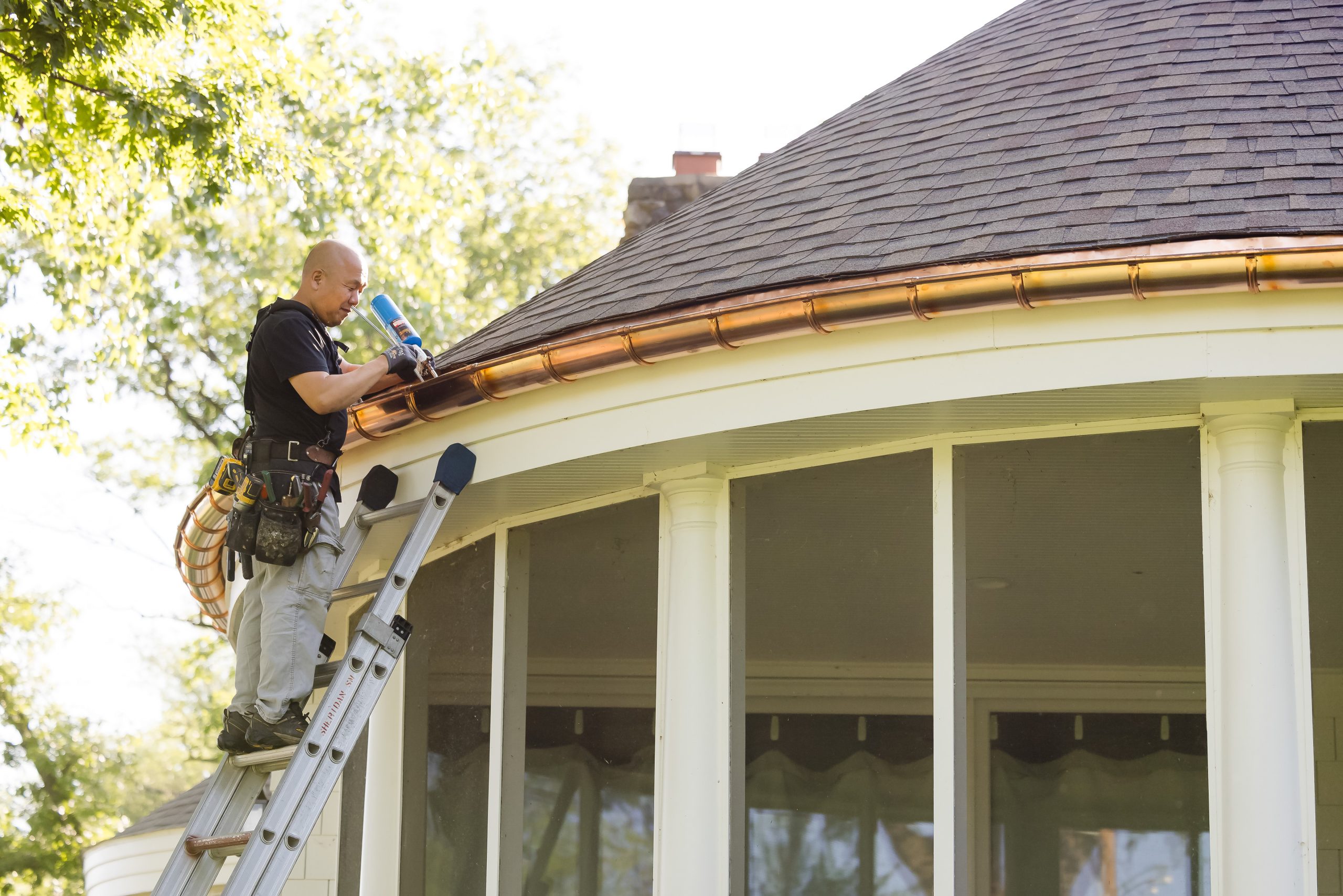
Want to learn how custom copper gutters would perform on your Minnesota home? Contact Sheridan Sheet Metal today to discuss a system designed specifically for your property and climate.