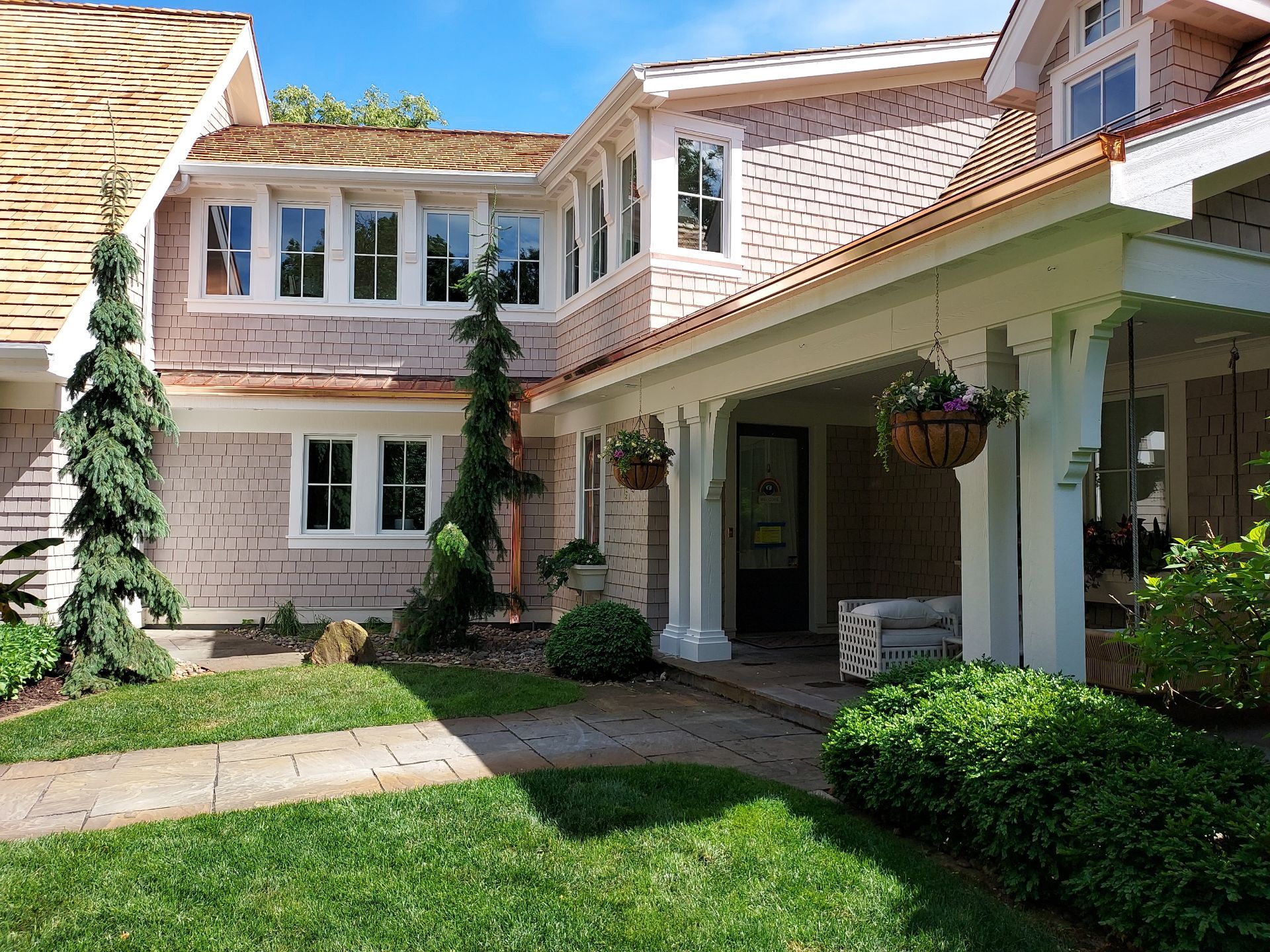
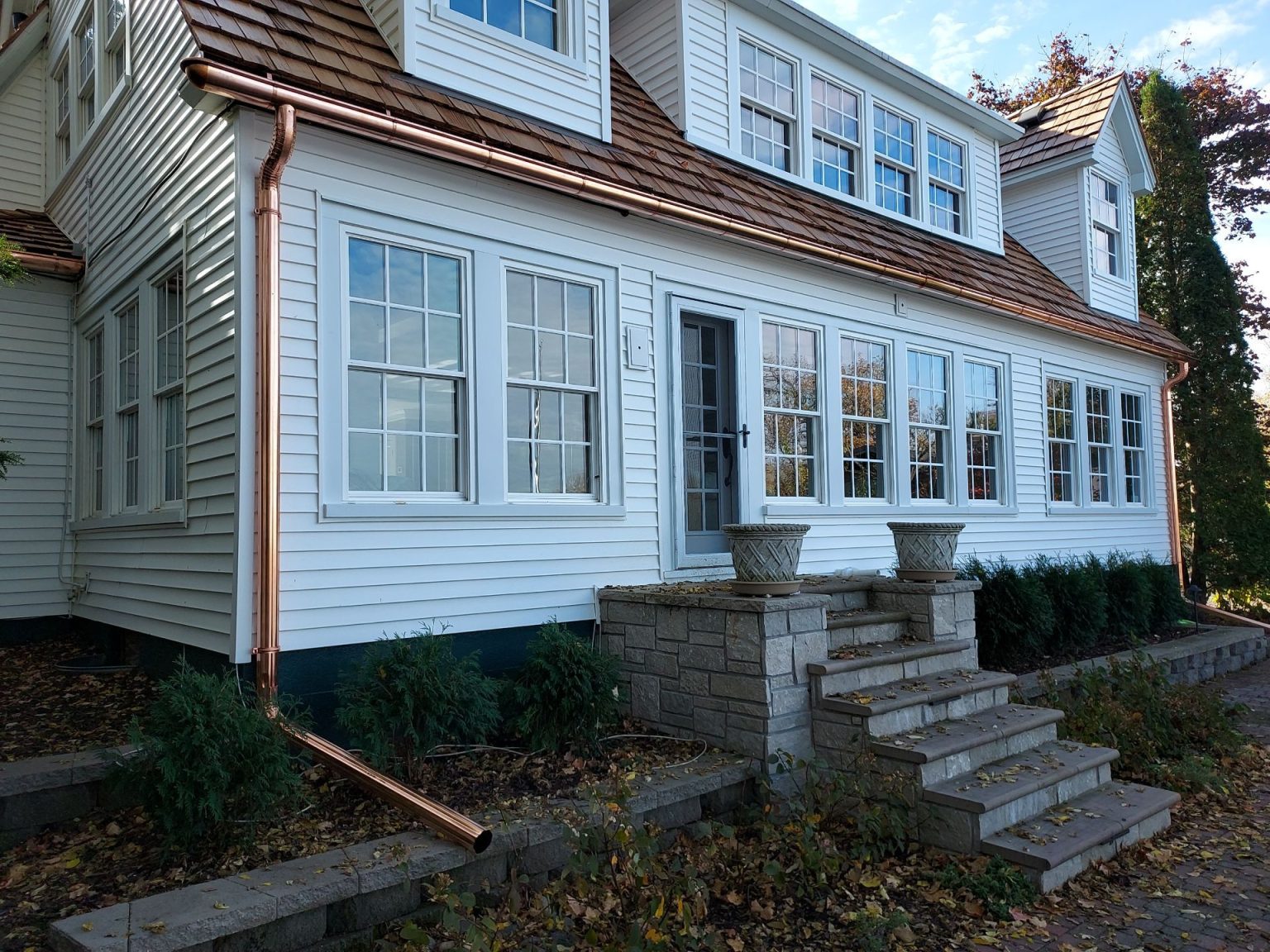
Cheap gutters aren’t a bargain, they’re a recurring expense disguised as a one-time decision. Aluminum and vinyl systems installed across Twin Cities homes today will likely need full replacement within 15 to 20 years. Factor in two or three replacement cycles over a lifetime of homeownership, and that “affordable” option quietly becomes one of the more expensive choices you can make. For homeowners evaluating long-term performance, copper gutters offer a durable, low-maintenance solution designed to withstand Minnesota’s extreme weather conditions.
Minnesota’s freeze-thaw cycle is the real stress test. Temperatures that swing from sub-zero in January to 90°F in July push thin-gauge metals and vinyl through repeated expansion and contraction. Joints loosen. Seams split. Sections pull away from fascia boards. What initially looked like a maintenance-free solution turns into a callback-generating liability, for homeowners and contractors alike.
The smarter shift is from commodity thinking to architectural thinking. A rain-carrying system isn’t just a functional accessory; it’s a permanent feature of your home’s exterior. Treating it that way changes the material conversation entirely.
That’s where seamless copper gutters enter the picture. Copper roofing and gutter systems are engineered to handle exactly what Minnesota throws at them, with a confirmed lifespan of 60 to 100 years, outlasting aluminum by decades. It’s a once-and-done investment, and the next section breaks down exactly why the numbers back that up.
Copper vs. Aluminum: Deciphering the Real Long-Term ROI
Copper’s higher upfront cost isn’t an expense, it’s the last gutter investment a homeowner will ever make.
As the previous section established, aluminum and vinyl systems carry hidden costs that accumulate quietly over time. Copper tells a different story. Where aluminum dents, corrodes, and eventually pulls away from fascia boards, copper holds its structural integrity across decades of freeze-thaw cycles, and heavy snow loads that are routine across the Twin Cities.
Maintenance is where the financial case becomes undeniable. Aluminum gutters require periodic repainting, resealing, and eventual full replacement. Copper is genuinely low-maintenance. Its defining advantage is the natural patination process, the same chemistry that transforms bright copper into the familiar blue-green finish. Those patinated copper gutters aren’t aging; they’re self-protecting. The patinated layer creates a stable, self-healing barrier that actively resists corrosion without paint, sealant, or intervention. Unlike coated metals, it doesn’t peel or chip.
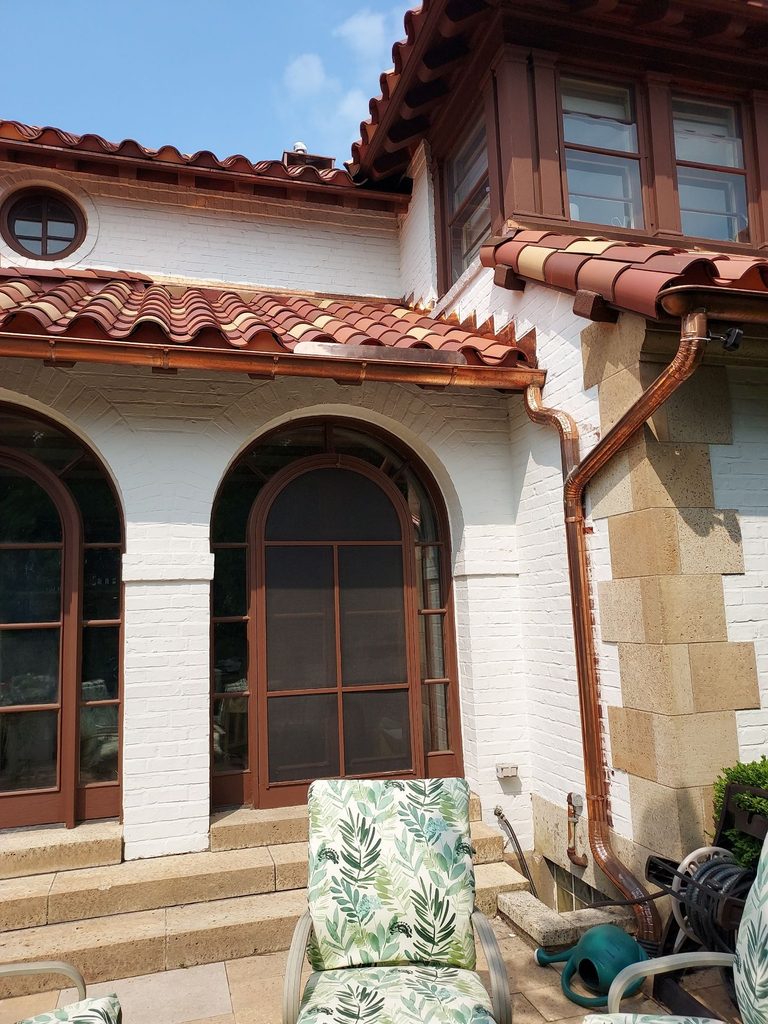
For homeowners considering the full picture, including long-term material performance on Minnesota properties, copper consistently signals quality to future buyers. A home with copper gutters and accents communicates a no-expense-spared maintenance history that appraisers and buyers recognize.
Hidden Costs of Aluminum:
- Repainting or touch-up every 5–7 years
- Resealing joints to prevent leaks
- Full system replacement every 15–20 years
- Fascia board repairs caused by water intrusion
- Sagging repairs from ice and debris weight
That maintenance burden compounds. Copper eliminates most of it, and its cold-climate performance goes even deeper than durability alone.
The Cold Climate Advantage: Fighting Ice Dams with Thermal Conductivity
Copper’s physical properties give it a genuine edge in Minnesota winters and the difference shows up every time temperatures swing below freezing.
When comparing copper gutters vs aluminum in a cold climate, thermal conductivity is the deciding factor most homeowners overlook. Copper transfers heat more efficiently than aluminum, which means it responds faster to temperature changes along the roofline. In practice, this helps surface ice melt and shed more readily rather than pooling and refreezing into the damaging ice dams that push under shingles and compromise insulation. As Huber & Associates notes, “copper roofing is particularly effective in cold climates because it resists snow and ice… snow and ice will slide off” rather than accumulating under sustained freeze pressure.

Structural integrity under ice load is where aluminum systems consistently fail. When heavy ice builds up along a gutter run, aluminum fatigues; it sags, pulls away from fascia boards, and eventually separates. Copper’s superior tensile strength holds its form through repeated freeze-thaw cycles, season after season.
That same durability extends to copper chimney caps, which protect the flue liner from direct moisture exposure. Every freeze-thaw cycle that reaches an unprotected masonry flue risks hairline cracks that widen over time into expensive structural repairs. A properly fitted copper cap shields that liner completely, eliminating the moisture entry point before damage begins.
That combination of weather resilience and long-term structural performance naturally raises a deeper question: how does copper hold up visually over those same decades?
Copper Gutters for Historic Minnesota Homes and Luxury Properties
For historic and luxury properties, copper isn’t a material upgrade; it’s the only material that maintains architectural authenticity.
Historic character demands historic materials. On streets like Summit Avenue in St. Paul, where century-old Victorians and Colonial Revivals define entire neighborhoods, copper is the non-negotiable standard. Preservation guidelines, HOA requirements, and simple visual logic all point to the same conclusion: synthetic alternatives break the spell. When someone asks are copper gutters worth it on a home with carved limestone details and original slate, the question almost answers itself. For historic Minnesota homes and luxury properties, copper isn’t simply a material upgrade; it’s often the only material that preserves architectural authenticity.
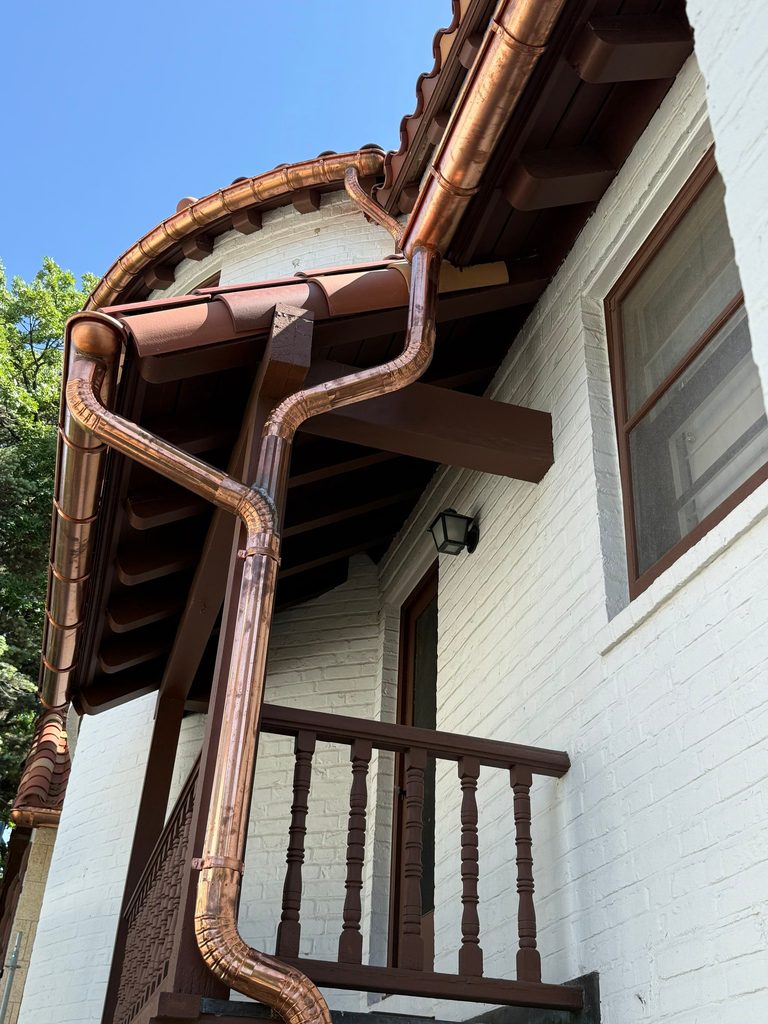
Patina is part of the design. Copper’s visual journey, from bright new-penny warmth to a deep, stately verdigris green, isn’t a flaw. It’s a finish that develops over 10 to 20 years and becomes a defining feature of the property. No paint or coating replicates it.
Copper accents elevate even standard architecture. Three of the most impactful applications include:
- Bay windows — copper caps and standing-seam rooflets add definition and weather protection simultaneously
- Cupolas — a copper top transforms a decorative element into a permanent architectural focal point
- Chimney tops — copper chimney caps and saddles signal craftsmanship from the street
Custom fabrication is what makes these details work. Every profile, pitch, and corner is unique, and off-the-shelf components rarely fit cleanly, a point that the next section addresses directly.
The Craft of Installation: Why Local Fabrication Matters
Copper’s longevity depends as much on the installer’s craft as on the material itself, and that’s where the gap between off-the-shelf solutions and professional architectural sheet metal work becomes impossible to ignore.

A common cause of copper installation failures is poor soldering. Joints that aren’t properly tinned and sweated will leak, separate under thermal expansion, or fail outright after a single Minnesota freeze-thaw cycle. DIY copper attempts carry the same risk, it’s a forgiving material to admire but an unforgiving one to work with.
Local fabrication changes the equation in three concrete ways:
- Material quality. Domestically fabricated copper is produced to consistent gauge standards, critical when you’re matching metal weight to Twin Cities snow loads, which routinely exceed what southern-climate specifications account for. Undersized gauge means premature deformation under heavy ice and snow accumulation.
- Lead times. Local manufacturing means custom profiles are fabricated and delivered on your project timeline, not a national distributor’s schedule.
- Accountability. A local shop backs its work. Sheridan Sheet Metal’s 5-year installation warranty isn’t a formality; it’s a direct expression of confidence in the fabrication and installation quality behind every project.
People often ask how long copper gutters last; the honest answer is that the material can outlast the building, but only when it’s properly specified, fabricated, and installed. Pairing the right gauge to your roof’s specific load requirements, and having downspout systems detailed correctly from the start, is what separates a 75-year system from a 15-year disappointment.
The craftsmanship behind the installation ultimately determines whether copper delivers on its promise. And that leads directly to the question most homeowners eventually ask: is the investment actually worth it?
The Bottom Line: Is Copper Worth It for Your Property?
Copper roofing value isn’t measured in years; it’s measured in generations. For Twin Cities homeowners weighing the upfront cost against long-term return, the math is straightforward once you look at the full picture.
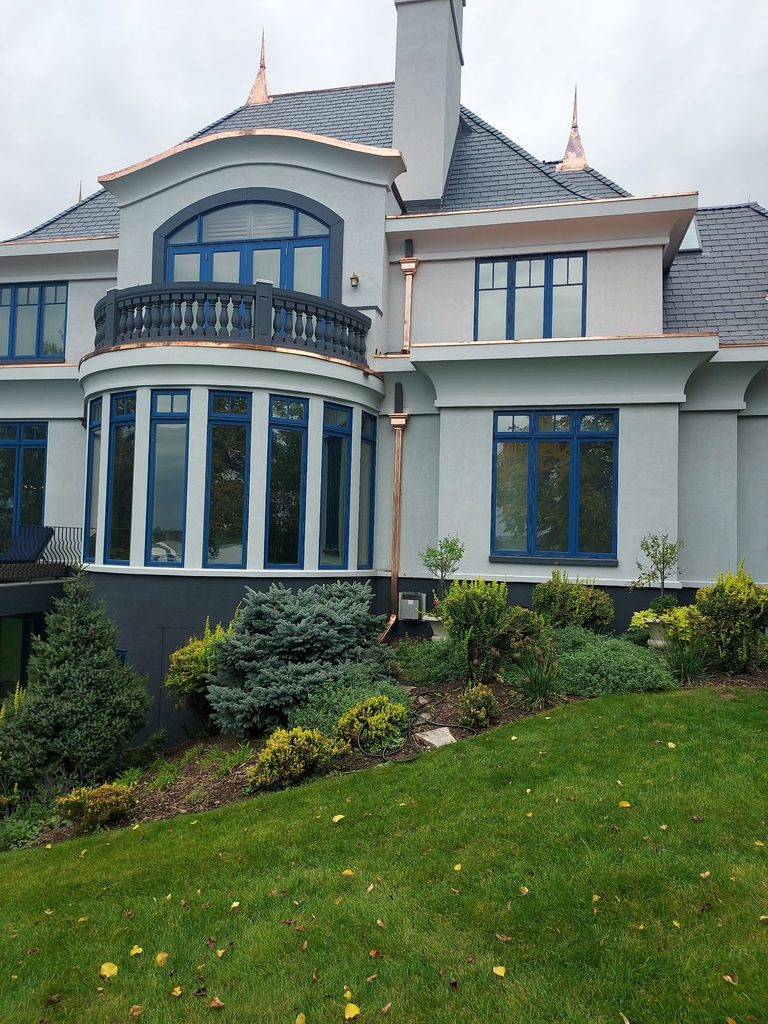
Here’s what the evidence consistently shows:
- Lifespan. Copper is a lifetime material, outlasting standard aluminum or vinyl systems by up to 90 years, according to Gutter Professionals. That’s 4–5 replacement cycles you’ll never have to manage.
- Maintenance. The natural patina that develops over time acts as a built-in protective layer — no painting, no rust-proofing, no periodic refinishing required.
- Performance. Copper’s superior thermal properties help moderate temperature swings along the roofline, which means better resistance to the ice damming that plagues Minnesota winters. If you want to understand how ice dams form and why proper installation matters, it’s worth a closer look.
- Value. A well-executed copper installation raises curb appeal immediately and signals quality to future buyers, the kind of upgrade that rewards you every year you stay and pays back when you sell.
On balance, copper asks more upfront and returns more over time. For homeowners who plan to stay, or who simply want to stop replacing the same systems every decade, it’s not an extravagance. It’s the practical choice. That long-term thinking is exactly what shapes how we approach every copper project we take on.
Investing in Your Home’s Future with Sheridan Sheet Metal
The shift from “what does this cost?” to “what is this worth?” is at the heart of every copper project we take on. Once you understand that copper rain-carrying products and architectural accents outlast virtually every other material on a Minnesota home, the investment calculus changes entirely.

For over 75 years, Sheridan Sheet Metal has been the Twin Cities’ go-to partner for architectural sheet metal Minneapolis homeowners and contractors trust. That’s not a marketing claim, it’s a multi-generational track record built one custom seam, one soldered joint, and one satisfied neighbor at a time. We’re local, we’re accountable, and we’re not going anywhere.
Working with a local partner means your project benefits from people who understand Minnesota weather firsthand, the ice, the freeze-thaw cycles, the heavy spring rains. We fabricate in-house, stock over 2,000 products, and can customize solutions that simply aren’t available off a truck. If you’re exploring whether copper makes sense alongside a broader roofing upgrade, our guide on metal roofing options for Minnesota homes is a practical next step.
We’d love to show you what’s possible. Visit our Minneapolis showroom, browse our inventory, or simply reach out to start a conversation. Request a custom fabrication and installation quote today and let’s build something that lasts a century.